
Imagine lying inside a curved shell of sound, where music does not simply surround you but moves through you. Frequencies rise from beneath the body, dissolve into the space above and travel seamlessly around the listener, while the outside world gradually recedes.
This is the idea behind the Elusis Portal, a sculptural immersive installation combining a reclining bed, a sixteen-loudspeaker spatial audio system and a vibroacoustic mattress that transmits low frequencies directly through the body.
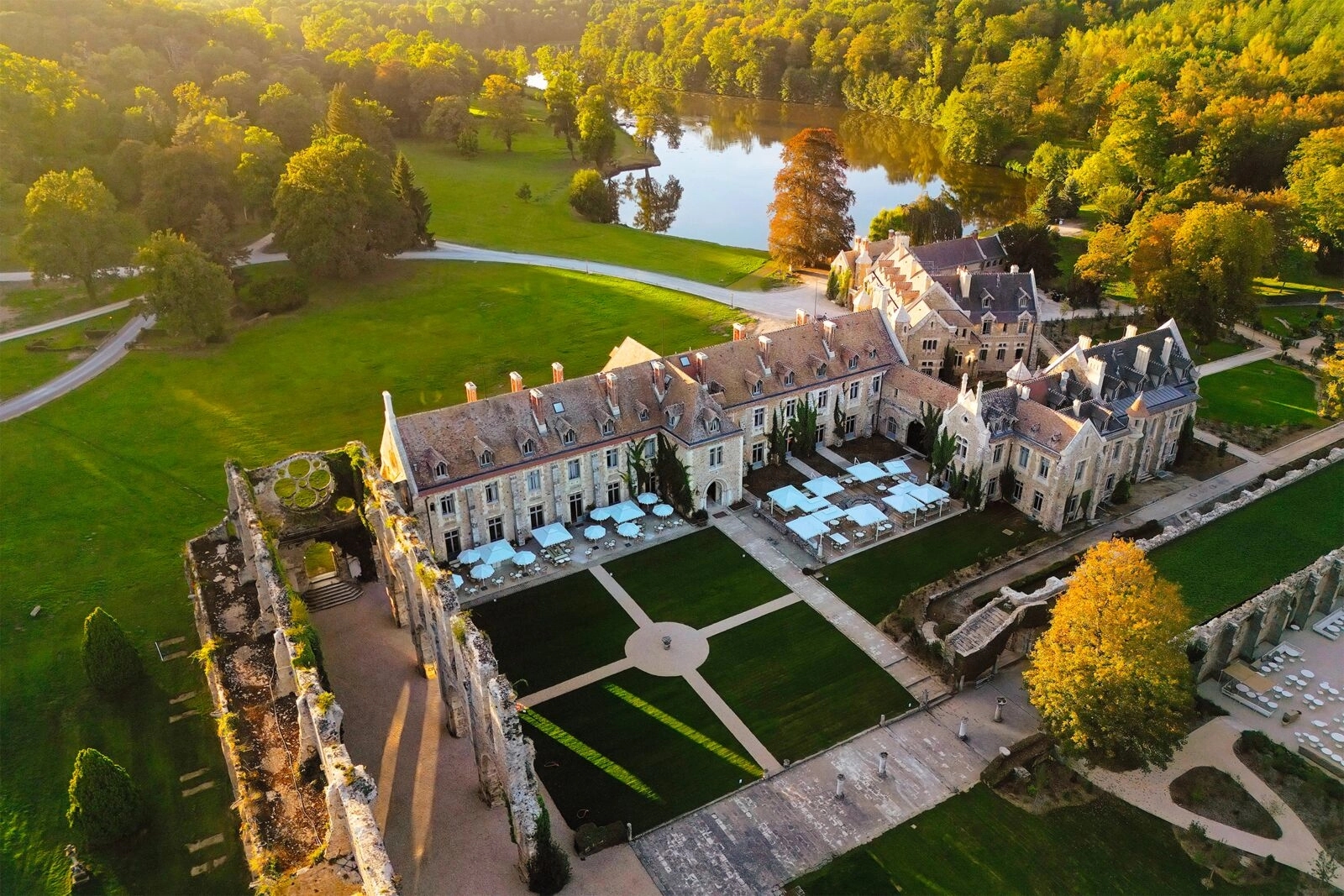
Developed by Elusis in collaboration with HOLOPHONIX and Amadeus, the Portal is installed in the spa of the Abbaye des Vaux-de-Cernay, a twelfth-century Cistercian monastery in the Chevreuse Valley, where architecture, sound and vibration come together to create a deeply immersive listening environment.
Spatial audio as the core of the experience
At the heart of the Portal is HOLOPHONIX Native, the spatial audio engine responsible for transforming a circular array of sixteen loudspeakers into a fully three-dimensional sound field.
Every element of the composition - nature recordings, acoustic instruments and synthesised textures - is treated as an individual sound object that can be positioned and animated anywhere around the listener in real time. Rather than hearing loudspeakers, visitors experience an evolving sonic environment in which sounds move continuously through space.
Because the listener remains reclined at the centre of the array throughout the session, achieving stable and precise localisation required particularly careful optimisation. To improve spatial rendering around the perimeter of the loudspeaker array, the HOLOPHONIX team implemented two additional virtual loudspeaker positions without adding physical speakers, improving algorithmic stability where the geometry is most demanding.
HOLOPHONIX is the brain of the spatialization. It allows us to compose in three-dimensional space, to place individual sound elements precisely around the listener, to move sounds through trajectories, and to create the perception of an environment rather than a playback. The listener doesn't hear speakers. They hear a world,
says Daniel Schotsborg, co-founder and CEO of Elusis.
Designing the acoustics from the inside out
While HOLOPHONIX shapes the sound field, Amadeus focused on the acoustic behaviour of the enclosure itself.
The curved wooden half-sphere presented significant acoustic challenges. Reflective surfaces can generate early reflections capable of degrading spatial precision, so the enclosure was first modelled using EASE 5 simulations before any loudspeakers were installed. Absorptive and diffusive treatments were then integrated directly into the structure, allowing the room acoustics and the spatial rendering to be developed together.
The loudspeaker system consists of sixteen 4-inch full-range drivers arranged in a circular array and tilted at -49° to align with the listener's hearing plane, ensuring consistent tonal balance and spatial coherence from the single listening position. Amadeus also designed the Dante network architecture and remote maintenance infrastructure using dedicated VLANs to guarantee long-term reliability, while Atelier 33 manufactured the custom technical racks housing the HOLOPHONIX processor, amplification and network equipment.
One of the biggest challenges was integrating sixteen loudspeakers and a projector into a curved wooden structure while preserving both its elegance and its acoustic performance. The goal was for the technology to disappear entirely behind the experience,
explains Adrien de Giovanni, Head of R&D at Amadeus.
For Schotsborg, the project was defined by a shared approach to craftsmanship.
Every member of the Amadeus team is a true craftsperson. What defines this partnership is a shared ambition to push the boundaries of what spatialized music can be and can do for people,
he says.
Composing for an immersive instrument
Rather than a conventional playback system, the Portal was conceived as a complete instrument in which music, spatialisation, vibroacoustics and architecture were designed together.
Every soundtrack is composed specifically for the installation using original recordings, acoustic instruments and environmental sounds. The vibroacoustic mattress reproduces the same low frequencies transmitted through the loudspeaker system, allowing visitors to experience sound both acoustically and physically.
Each session follows a carefully constructed narrative that guides visitors through states of deep relaxation, meditation or mental clarity. Behind the scenes, Elusis' generative engine continuously blends and sequences musical layers, ensuring that no two listening sessions are ever exactly alike.
Sound, rhythm, vibration and frequency are fundamental to everything. The rhythm of your breath, the beating of your heart, the synchronized firing of neurons in your brain. When these elements are intentionally brought together within a composed experience, the body and the nervous system respond directly,
says Daniel Schotsborg.
Beyond Performance Venues
Visitors are often surprised by how profoundly the experience is shaped by sound alone.
Guests speak of a profound letting go, an intense state of relaxation and sometimes even a complete loss of any sense of time. At every session I tell myself that I won't manage to relax, and yet I always end up completely letting go until I wake up only at the sound of the final gong,
says Laura Gobbi, Deputy Director of the spa at the Abbaye des Vaux-de-Cernay.
The Portal is the first expression of a broader vision that Elusis is continuing to develop through larger architectural installations and a future consumer version. Upcoming developments will incorporate biosensors capable of analysing the listener's physiological state in real time, allowing the generative engine to adapt music, spatialisation and vibroacoustic patterns accordingly.
For HOLOPHONIX and Amadeus, the project demonstrates how immersive audio can extend beyond theatres and concert halls into entirely new environments, where spatial audio, acoustics and architecture are conceived as a single system in service of a deeply engaging listening experience.
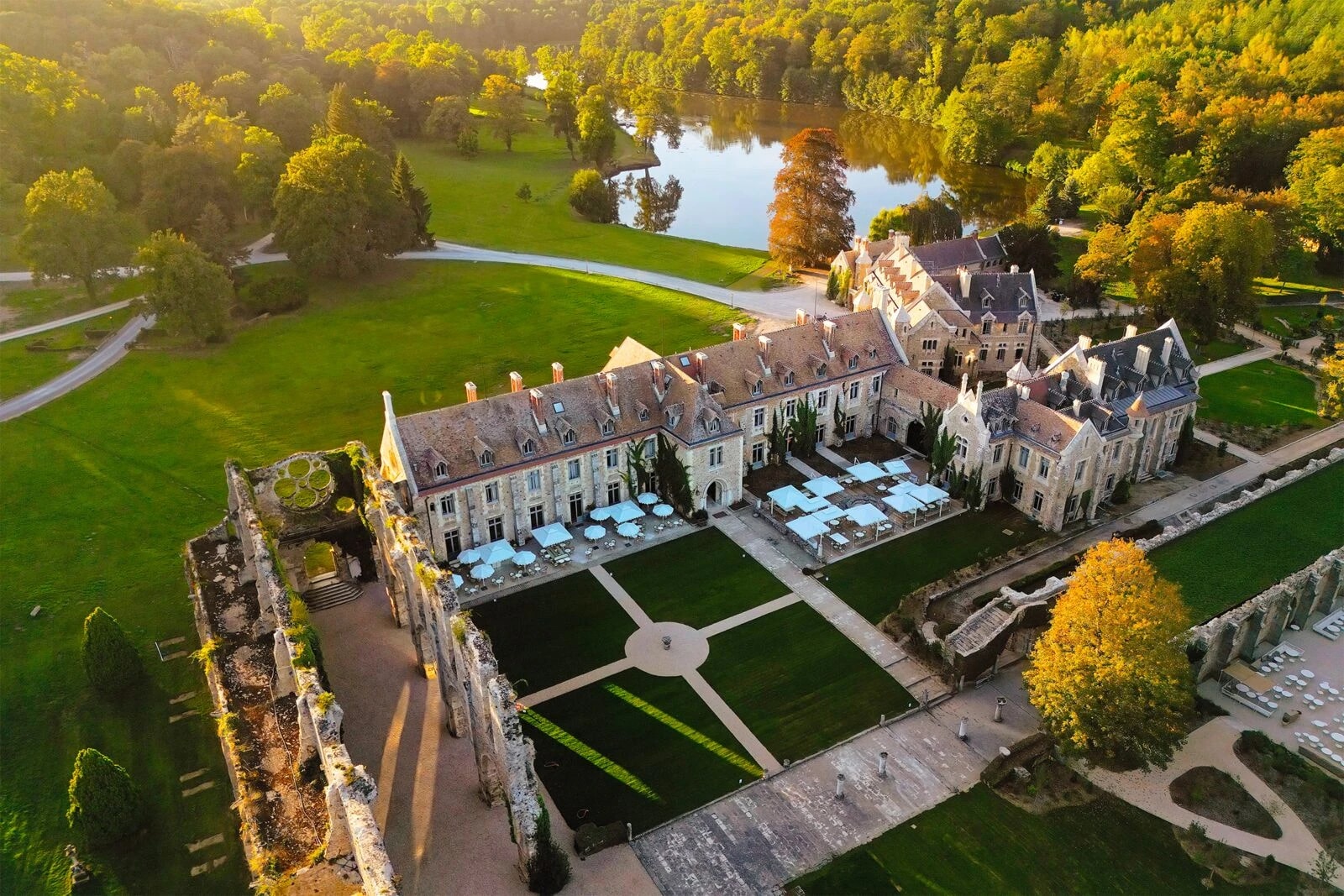
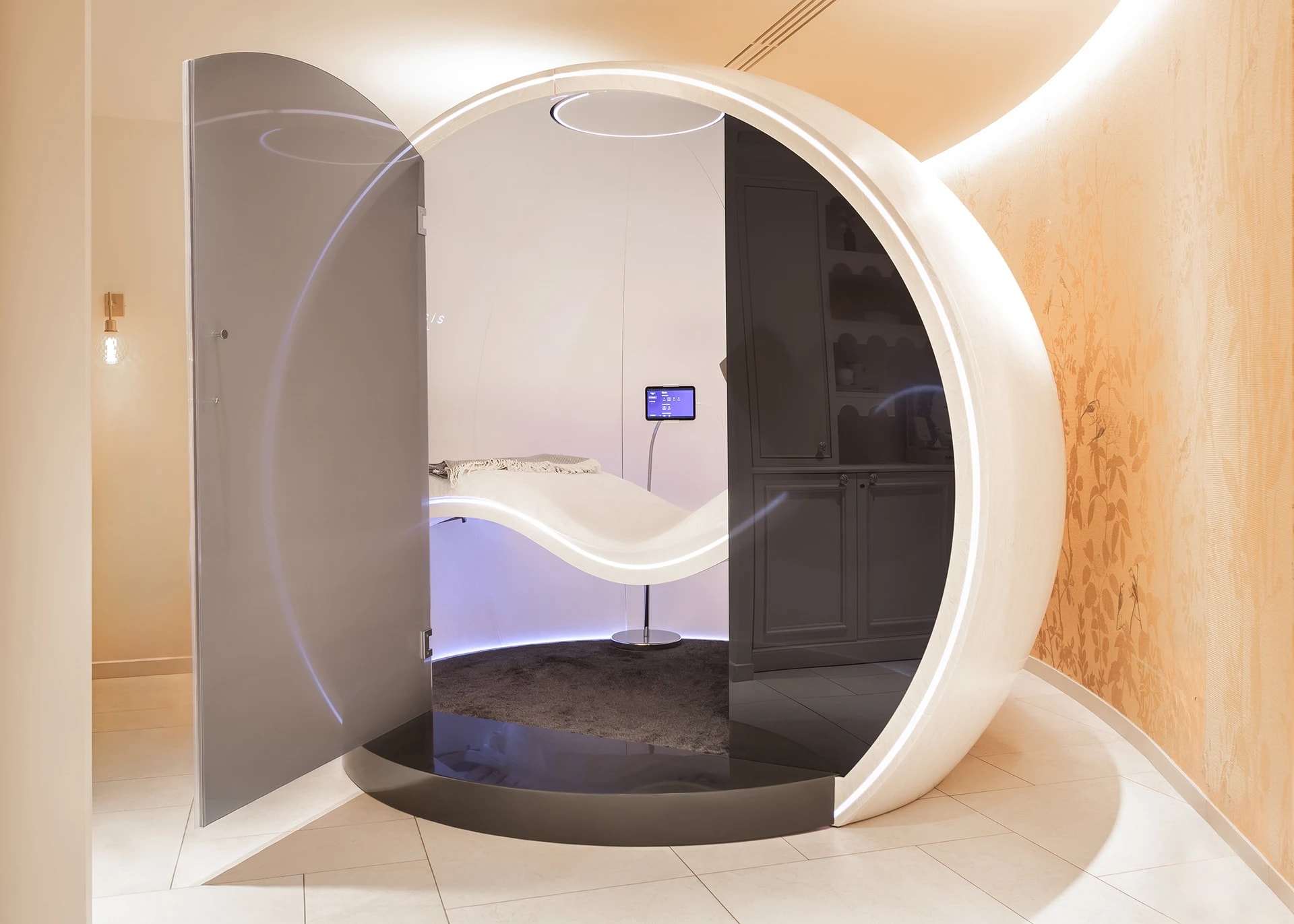
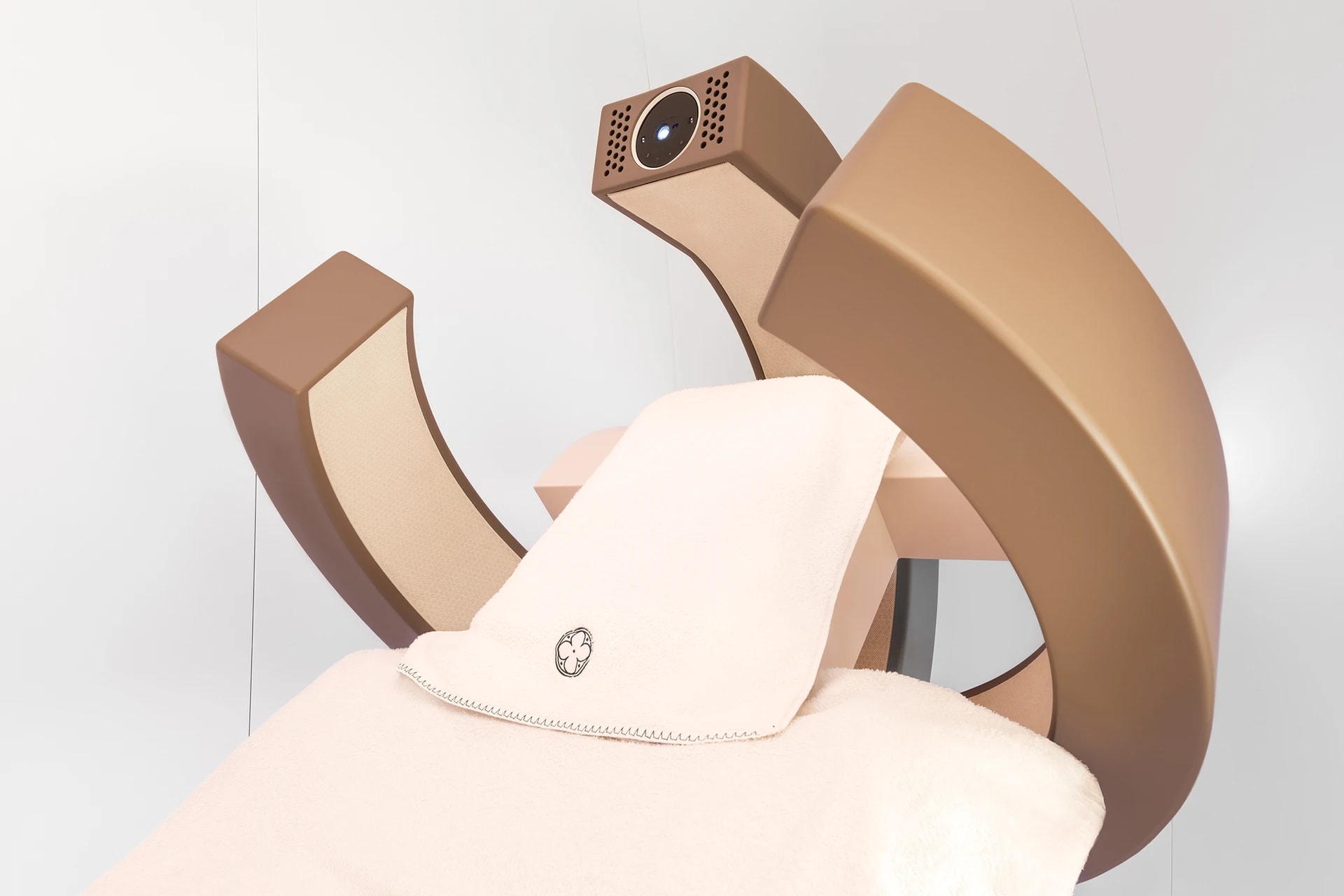
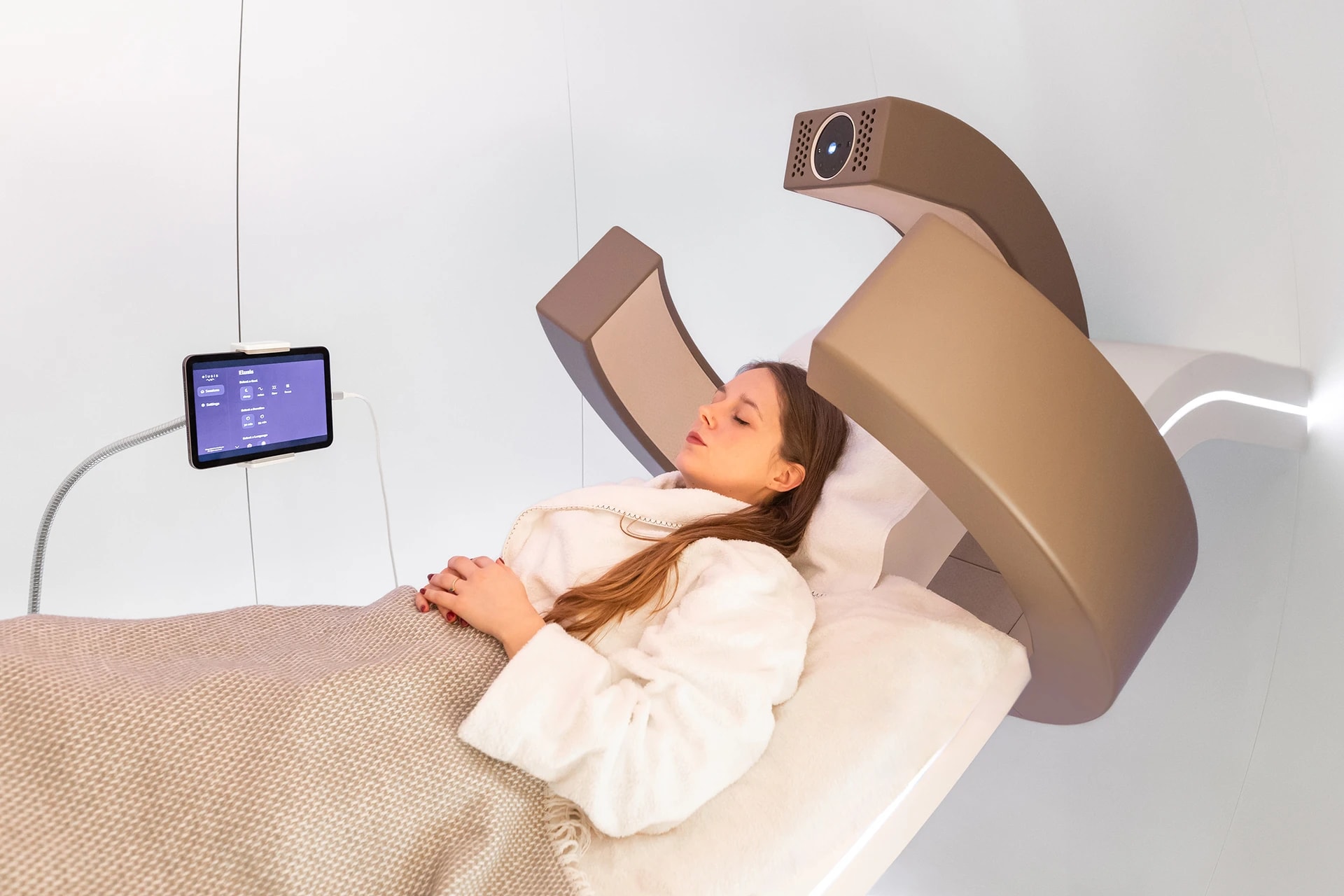
Photo credits — © Abbaye des Vaux-de-Cernay, © Helen Karam