
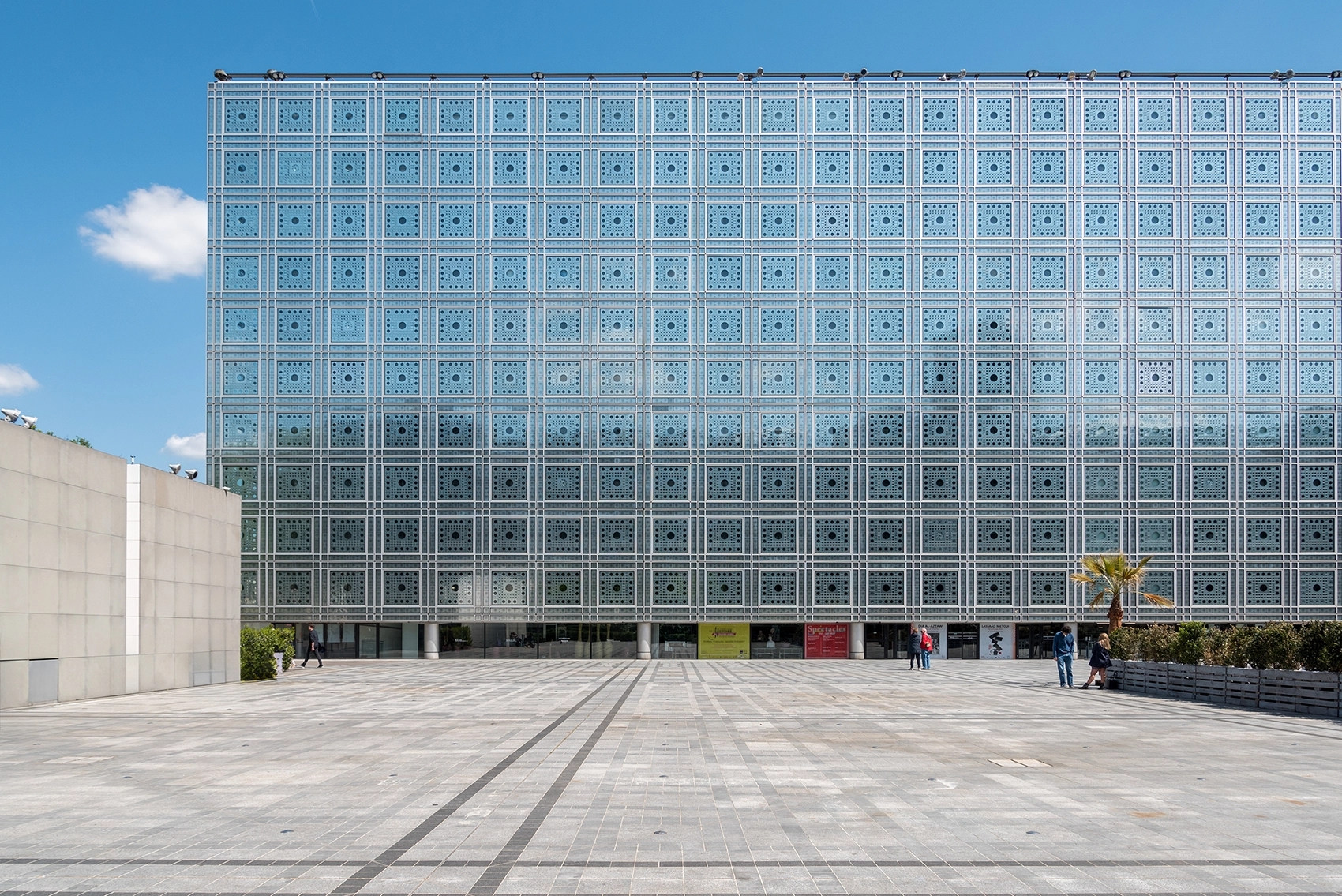
In Paris, the Institut du Monde Arabe (IMA), designed by architect Jean Nouvel, stands as both an architectural and cultural bridge between France and the Arab world, a place where heritage, knowledge, and art converge. Inside its emblematic Rafik Hariri Auditorium, sound has always played a central role. Yet the very design of the hall, wider than it is deep, posed an enduring acoustic challenge.
In an auditorium like ours, spatialization was the only truly effective solution. It was essential to connect the ear to the eye, so that what you hear can be identified with what you see. I call it the democratization of sound: every listener, wherever they sit, should have access to the same experience,
explains Rainer Engel, Director of Technical Operations at the IMA.
Guided by Rainer Engel’s vision, the IMA was among the pioneers of spatial sound in France, experimenting with early wave field synthesis (WFS) systems more than a decade ago.When these earlier technologies reached their limits, the institution turned to Amadeus and HOLOPHONIX, seeking both acoustic precision and aesthetic coherence.
When I discovered the Amadeus loudspeakers, it was a revelation! The quality of their construction, the balance of the sound, the precision, it was immediately clear that these were exceptional instruments,
recalls Engel.
The Rafik Hariri Auditorium now features a fully integrated HOLOPHONIX spatial processing system, paired with Amadeus loudspeakers and an SSL Live mixing console, enabling seamless interaction between mixing and spatial rendering. The installation is built on a Dante-native infrastructure, replacing earlier hybrid analog and MADI-based setups, ensuring lower latency, direct audio conversion, and unparalleled spatial precision.
All of the loudspeakers were replaced to achieve uniform coverage, superior timbral consistency, tighter control of dispersion and directivity, extended low-frequency response, and increased system density, all contributing to enhanced spatial accuracy and a coherent sound field.
Seven Amadeus C15 loudspeakers are suspended at the stage frame, interleaved with six ABB 12low-frequency reinforcements, providing flawless time and phase alignment, maximized summation, and precise co-localization across the critical 50–150 Hz band. Four ABB 18 subwoofers extend the response down to 30 Hz, delivering deep yet controlled infra-bass. Twelve front-fill ramp modules, each with dual 4-inch transducers recycled from the Théâtre National de Chaillot, ensure balanced coverage for the first rows.
This configuration enables precise sound source localization, full-bandwidth spatialization, and flawless timbral consistency across the entire listening area. Listeners perceive sound as moving naturally across the space, with no drop-offs, creating a true audiovisual correlation between what is seen and what is heard.
It’s astonishing, when you walk across the auditorium, the sound image follows you, like when you walk on a country path at night and feel that the moon moves with you,
Engel shares.
This new configuration, entirely Dante-native, also integrates a Solid State Logic Live console directly with HOLOPHONIX spatial processing, ensuring transparency, low latency, and full control across every source. Together, these innovations bring the auditorium into a new era, one where precision meets poetry.
Today, the Rafik Hariri Auditorium continues to host concerts, films, and conferences that honor the Arab world’s vibrant culture. Thanks to Amadeus loudspeakers and HOLOPHONIX spatial processing, each event resonates with clarity, balance, and emotion, reaffirming the Institute’s commitment to both heritage and innovation.
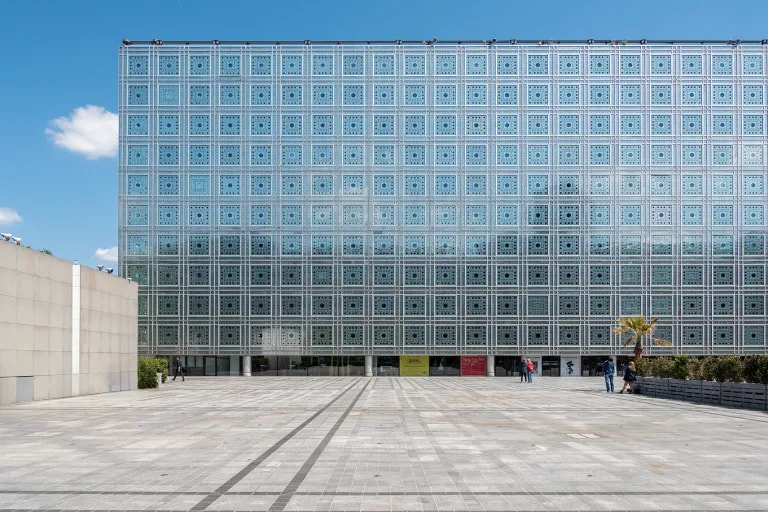
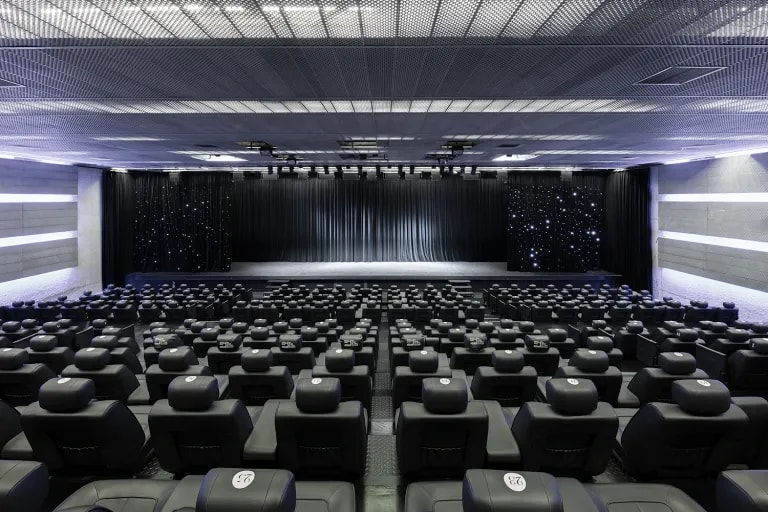
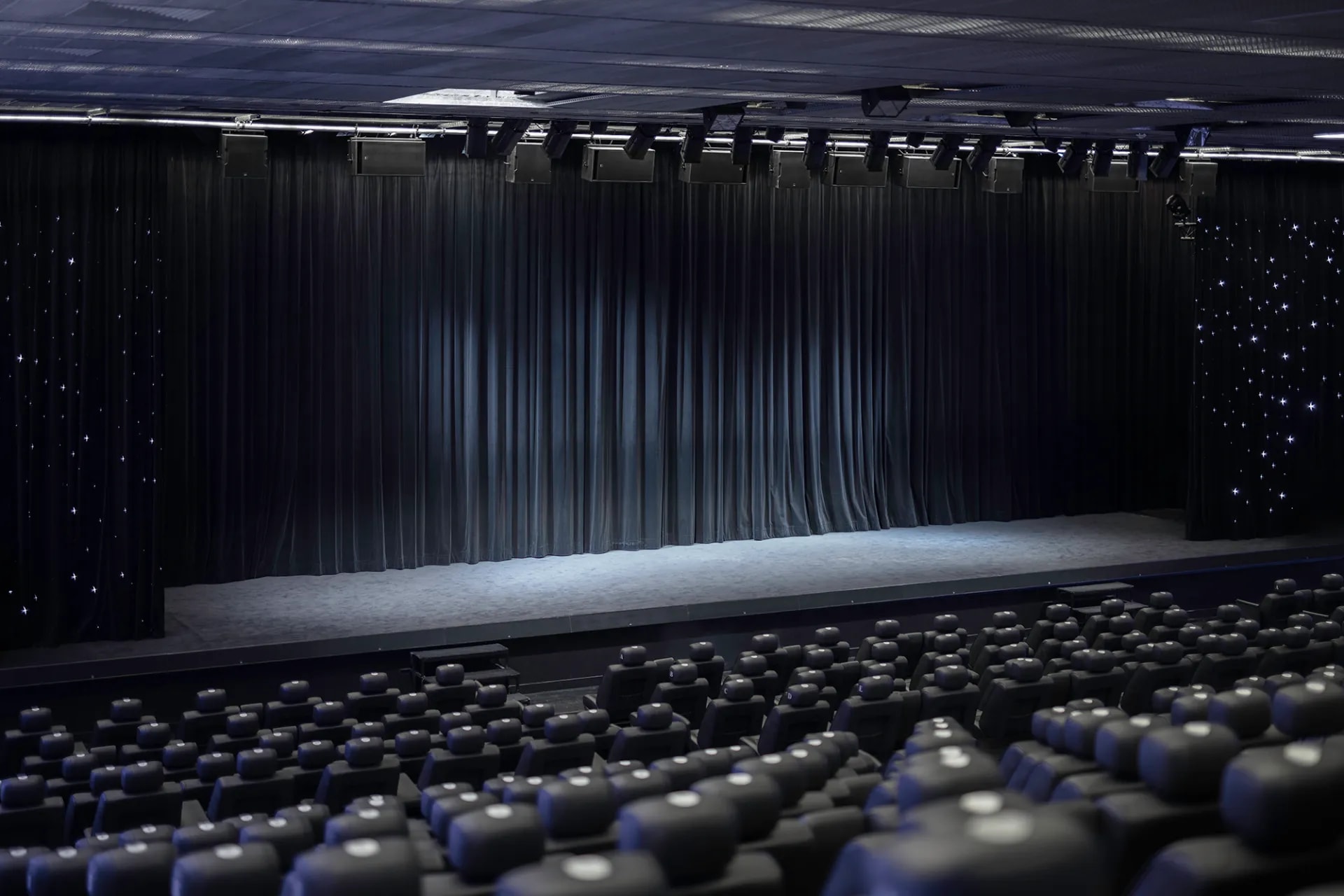
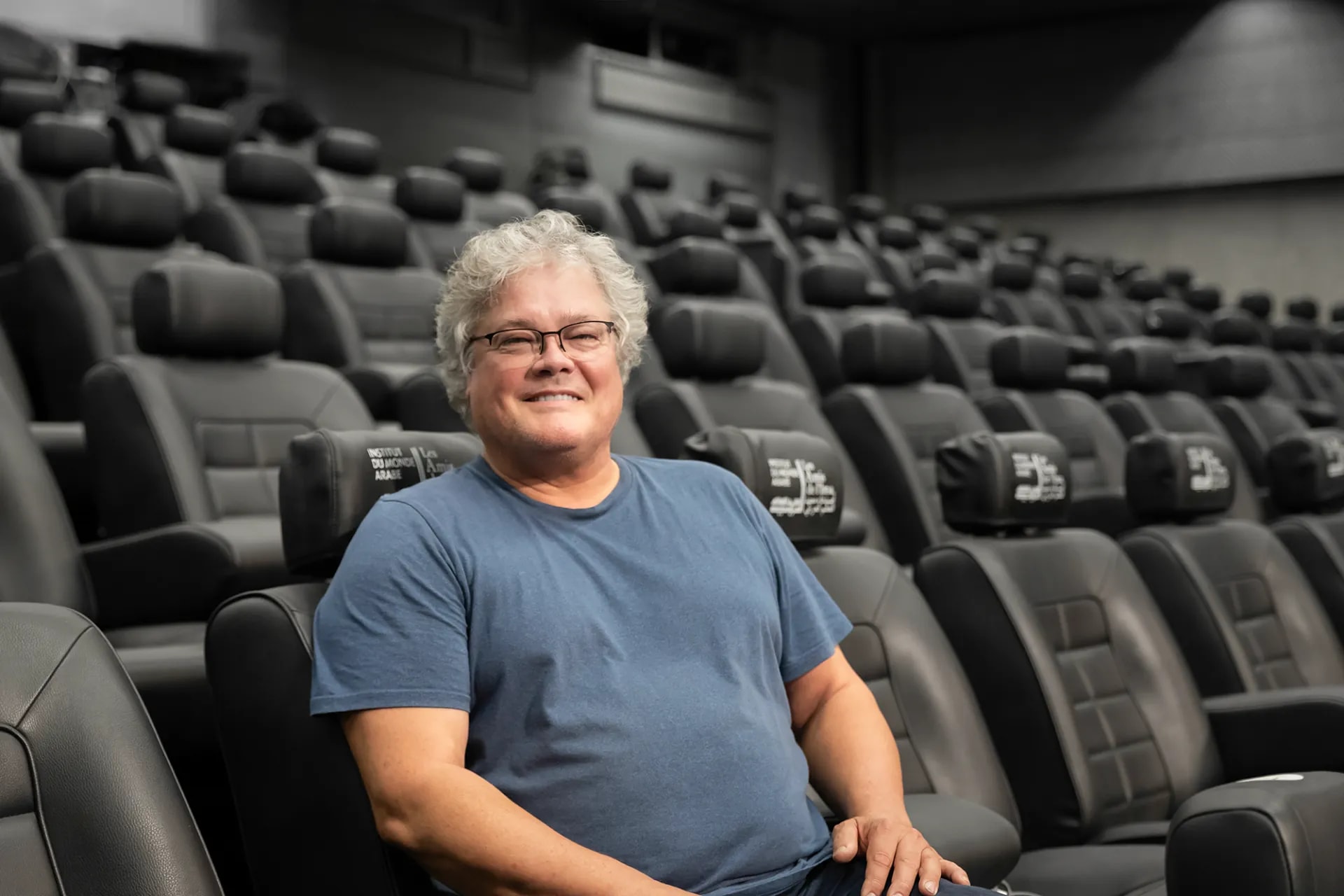
Photo credits — Helen Karam, © Helen Karam