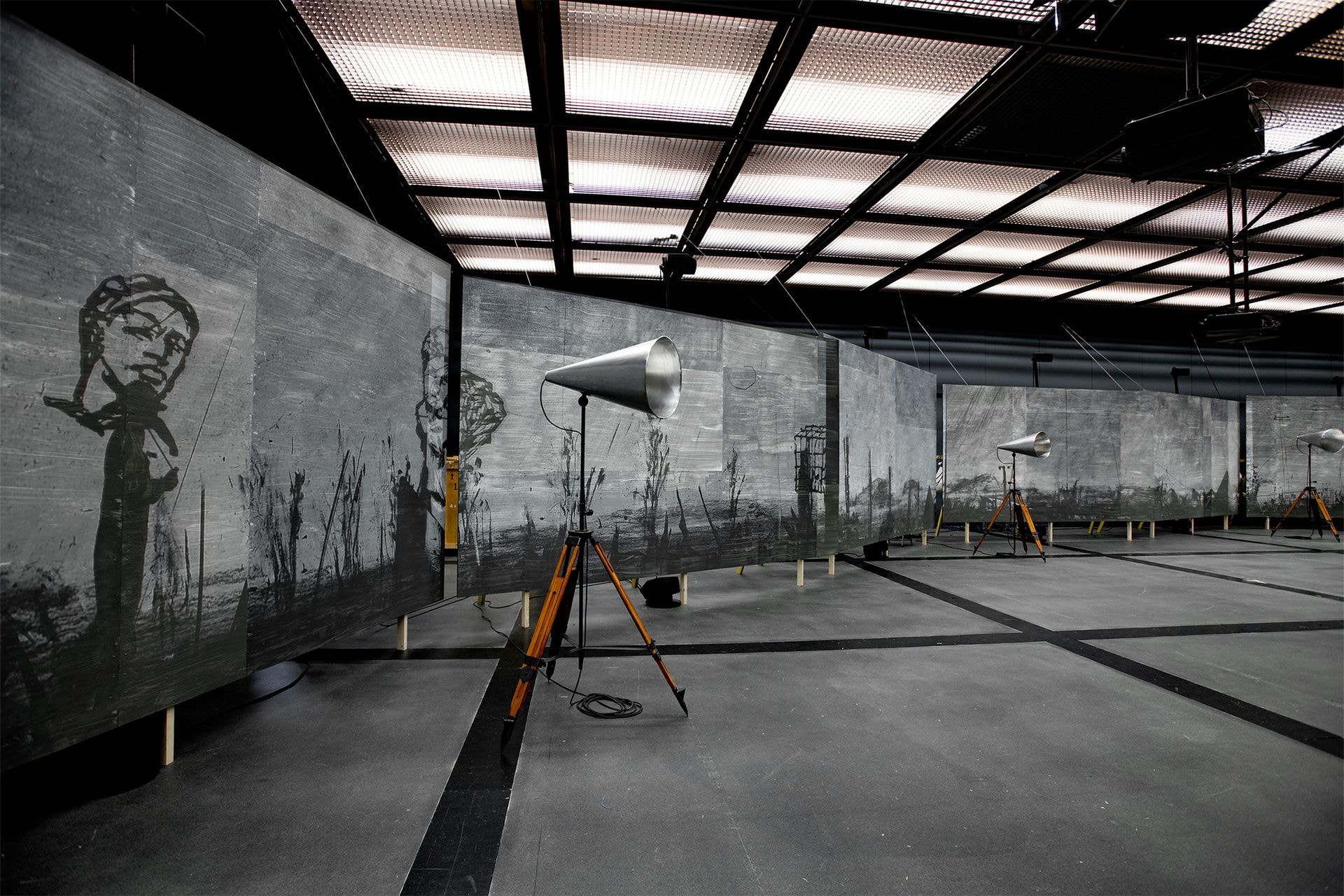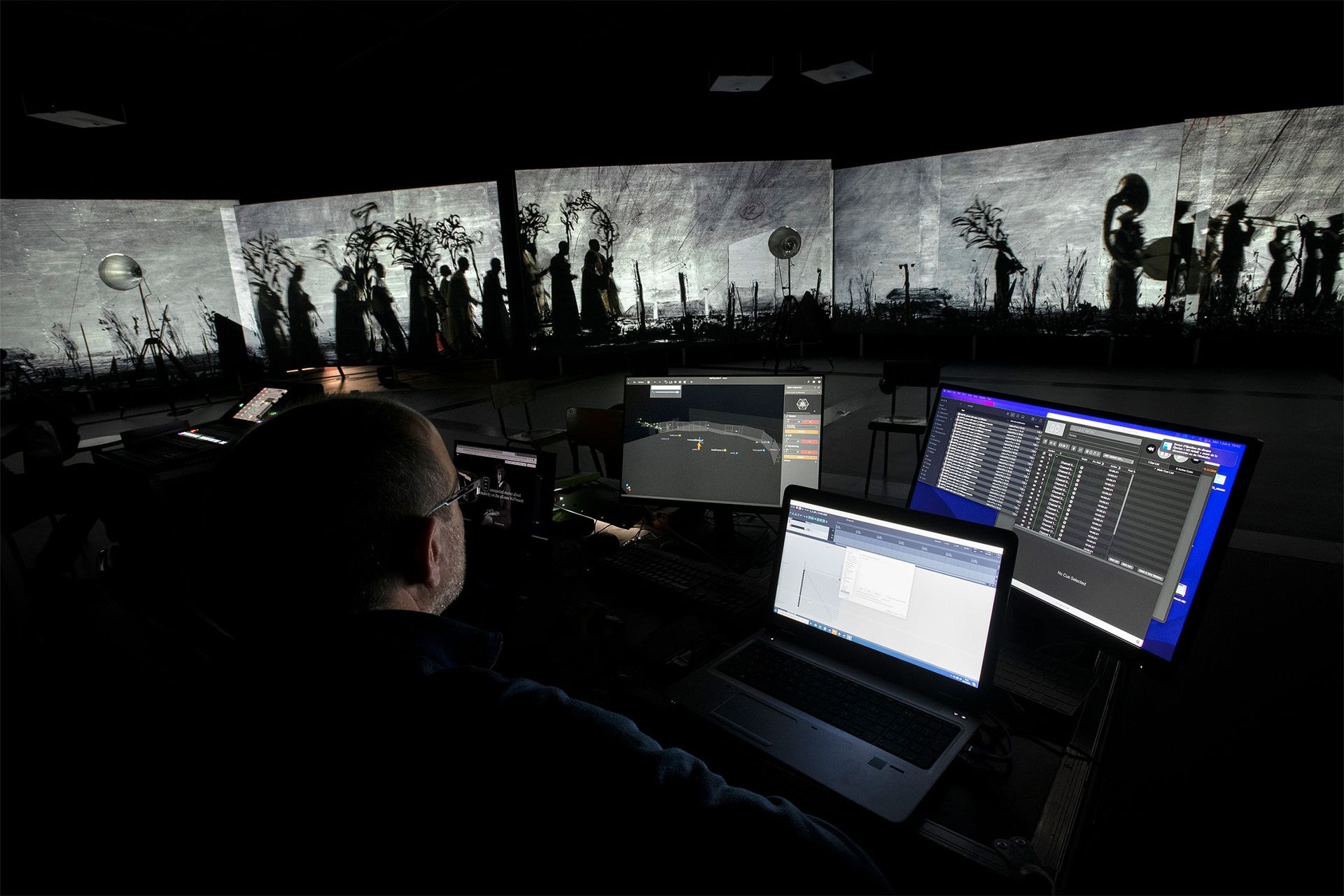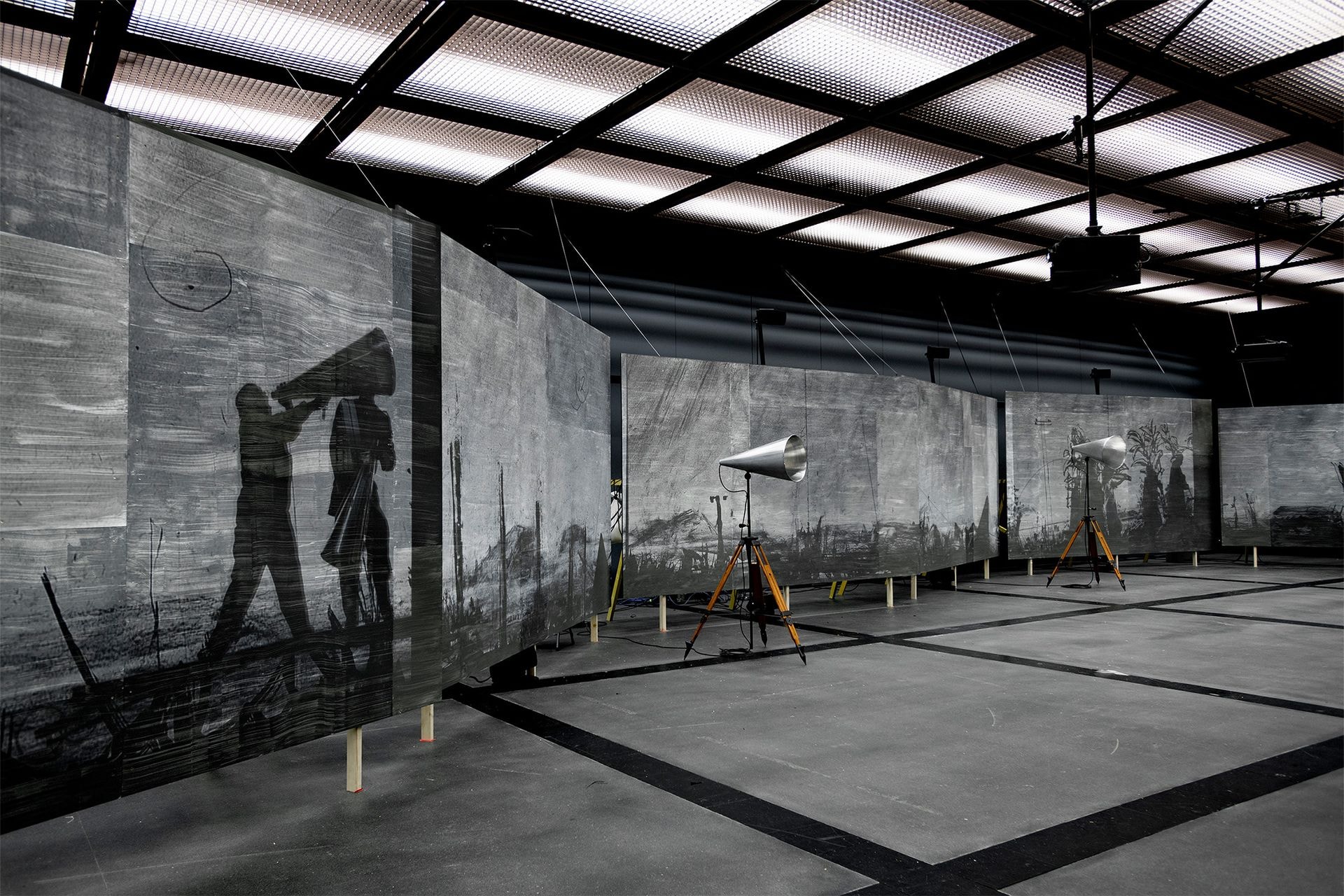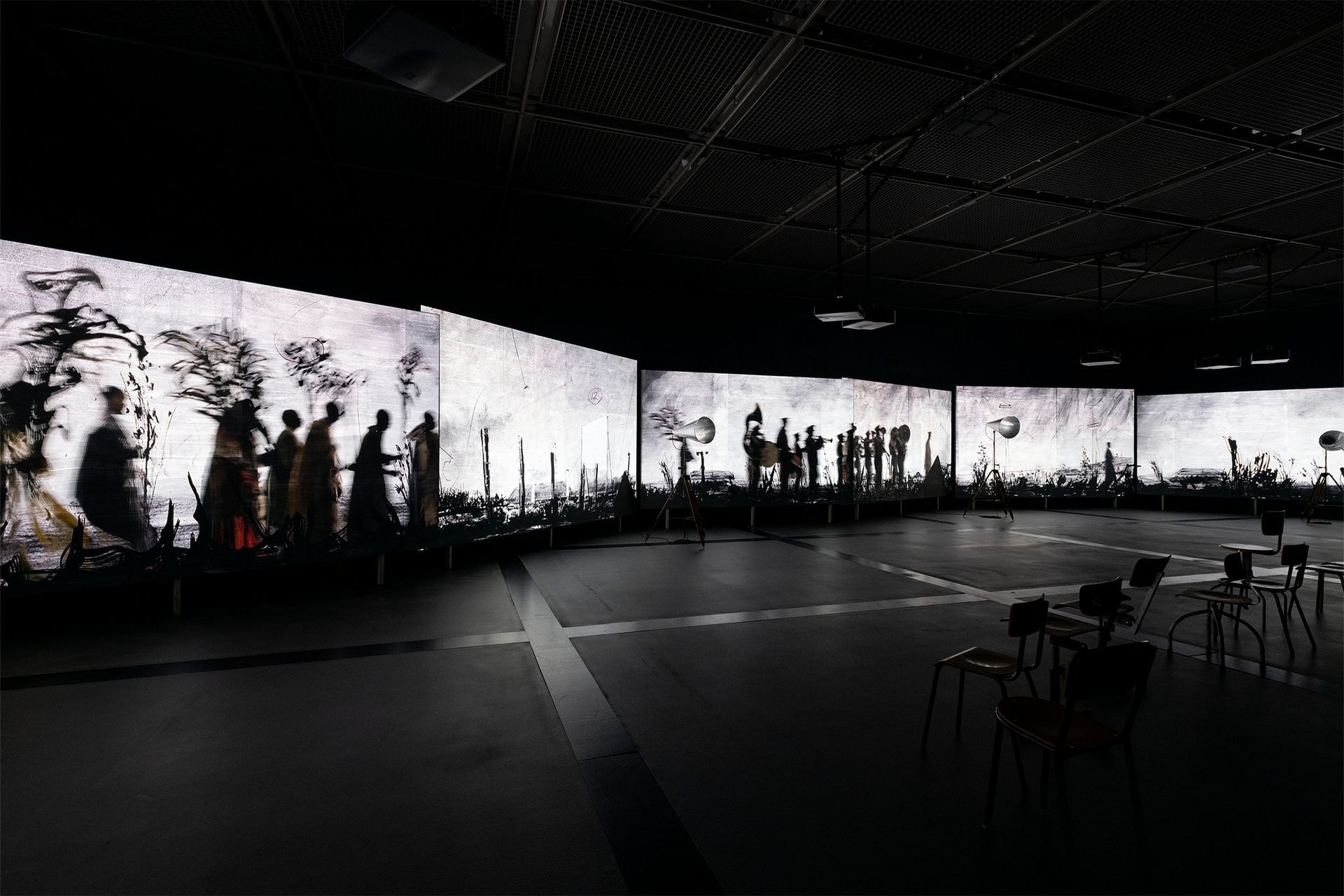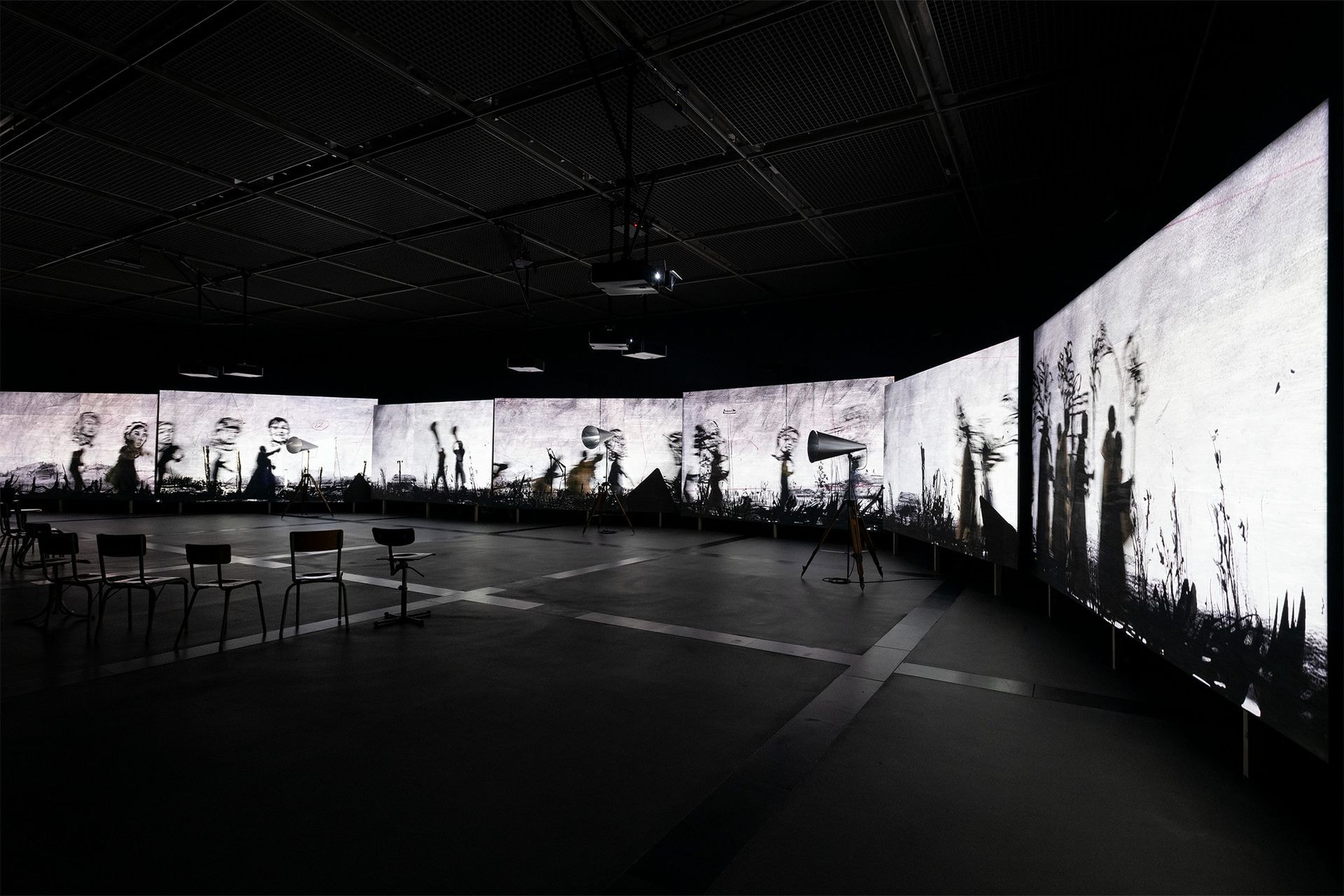
Presented at Les Champs Libres in Rennes, More Sweetly Play The Dance by South African artist William Kentridge was reimagined through a new immersive sound installation. Developed with HOLOPHONIX Native and an Amadeus loudspeaker system, the project transformed the original stereo soundtrack into a fully object-based three-dimensional mix while remaining faithful to the artist's vision.
The project formed part of Pas sommeil. La fête dans tous ses états, a city-wide exhibition exploring celebration as both a collective ritual and a form of resistance. The 35-metre panoramic installation surrounds visitors with a seemingly endless parade of characters, from musicians and dancers to miners, politicians and anonymous figures. A genuine dancing procession of moving images and sound, it invites them into a macabre dance while providing an opportunity to reflect on injustice and inhumanity.
Reimagining the sound design
Les Champs Libres has been exploring immersive sound technologies since 2016, when its auditorium was equipped with a sound localisation system built around the HOLOPHONIX spatial audio processor.
From the earliest stages of the project, the team believed that More Sweetly Play The Dance called for an immersive spatial audio approach. As Dewi Seignard, General Manager of the Champs Libres auditorium, explains:
We felt it was relevant to use a spatialized system. However, we could not deprive our auditorium of its HOLOPHONIX processor for several weeks. We were also aware of a development project at Amadeus concerning a software version of the HOLOPHONIX solution for macOS, which we were able to preview and suggest various ergonomic improvements.
The exhibition team worked closely with William Kentridge's collaborators to develop a new object-based version of the installation's sound design.
We wanted to go beyond a stereophonic left/right approach by bringing this work into a fully spatial dimension, where sounds move with the silhouettes of this macabre dance, appearing in front of, behind and above the audience, with depth and nuance,
explains Olivier Le Du, Head of Audiovisual and Digital Exhibitions at Les Champs Libres.
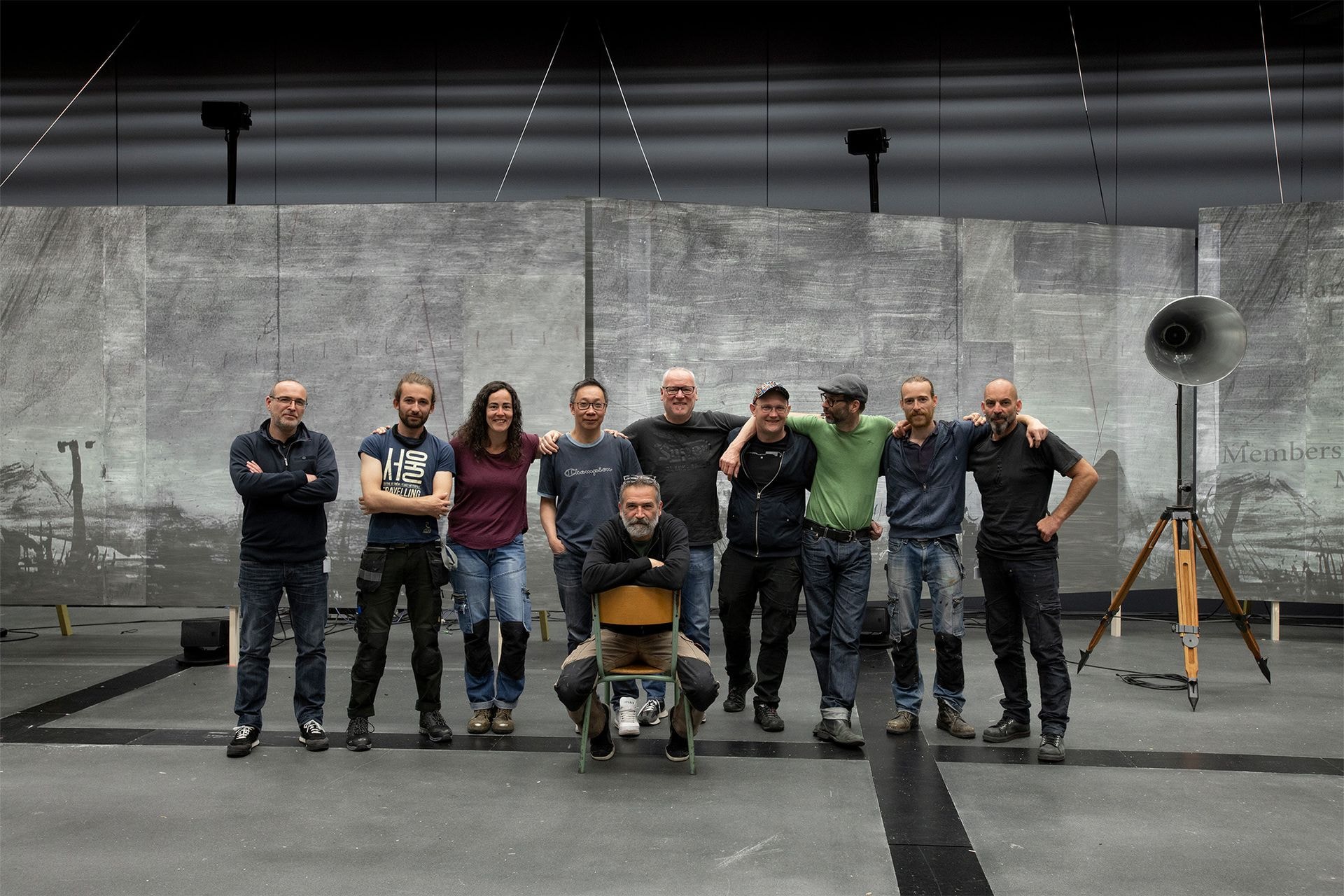
To develop the new installation, sound designer Gavan Eckhart worked alongside Dewi Seignard to rebuild the soundtrack from the original recordings as a fully object-based three-dimensional composition.
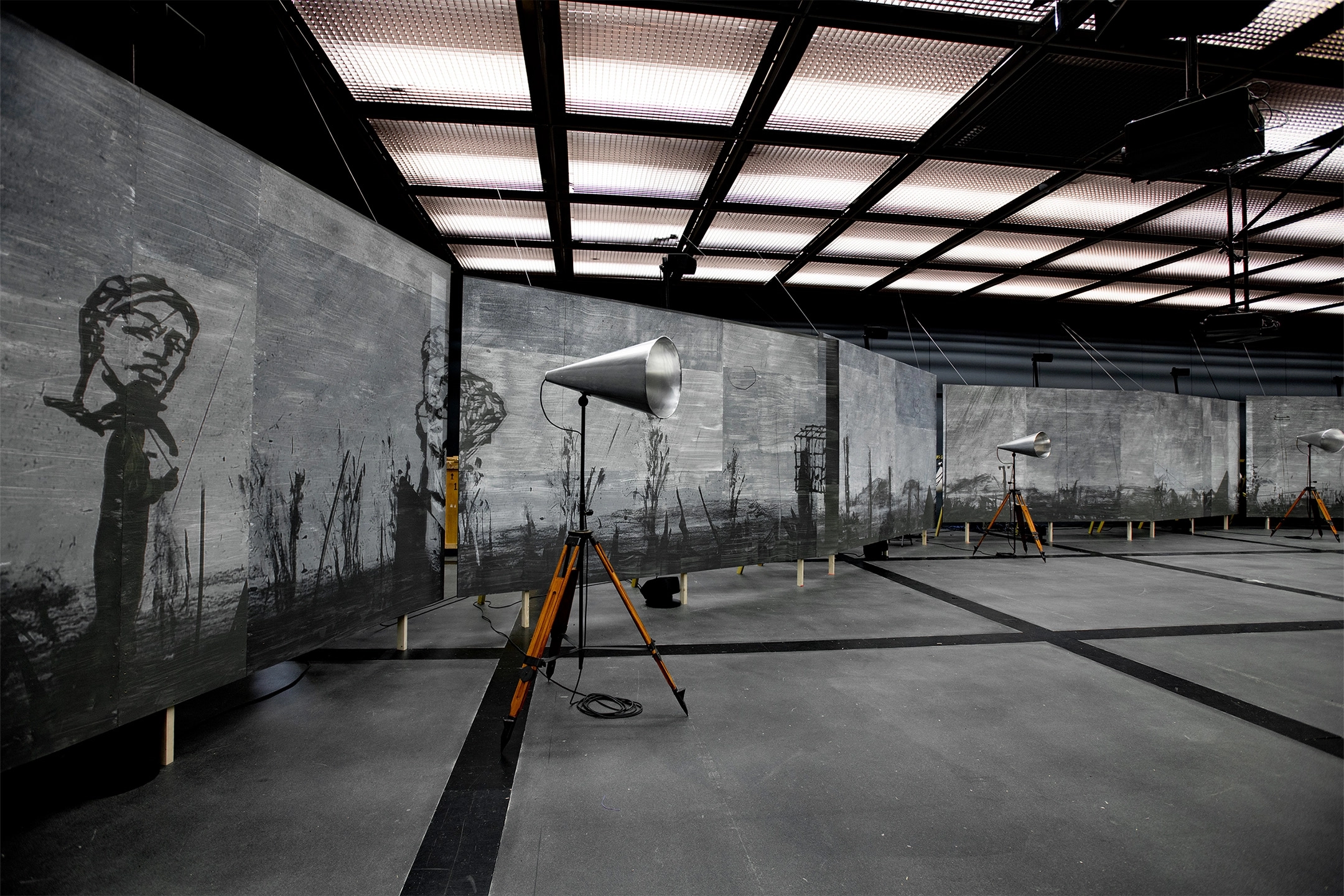
The original installation relied on a ten-loudspeaker system with a stereo-based soundtrack. For the Rennes presentation, the electroacoustic system was expanded to 22 loudspeakers, combining 16 Amadeus PMX 5 point-source loudspeakers, four Amadeus ML 12 subwoofers and the original acoustic horns.
According to Dewi Seignard, preserving the relationship between image and sound required careful control of when and how the spatialisation was applied:
The system allowed us to perfectly synchronise the sound materials as the procession progressed, only when needed, because the relationship between image and sound is not automatic in the artistic proposal. We had to respect the purpose and progression of the parade, adapt to movements that are not completely linear, and maintain a delicate balance between the different sound sources. Gavan was very satisfied with the final result, repeating several times: 'It's magic,
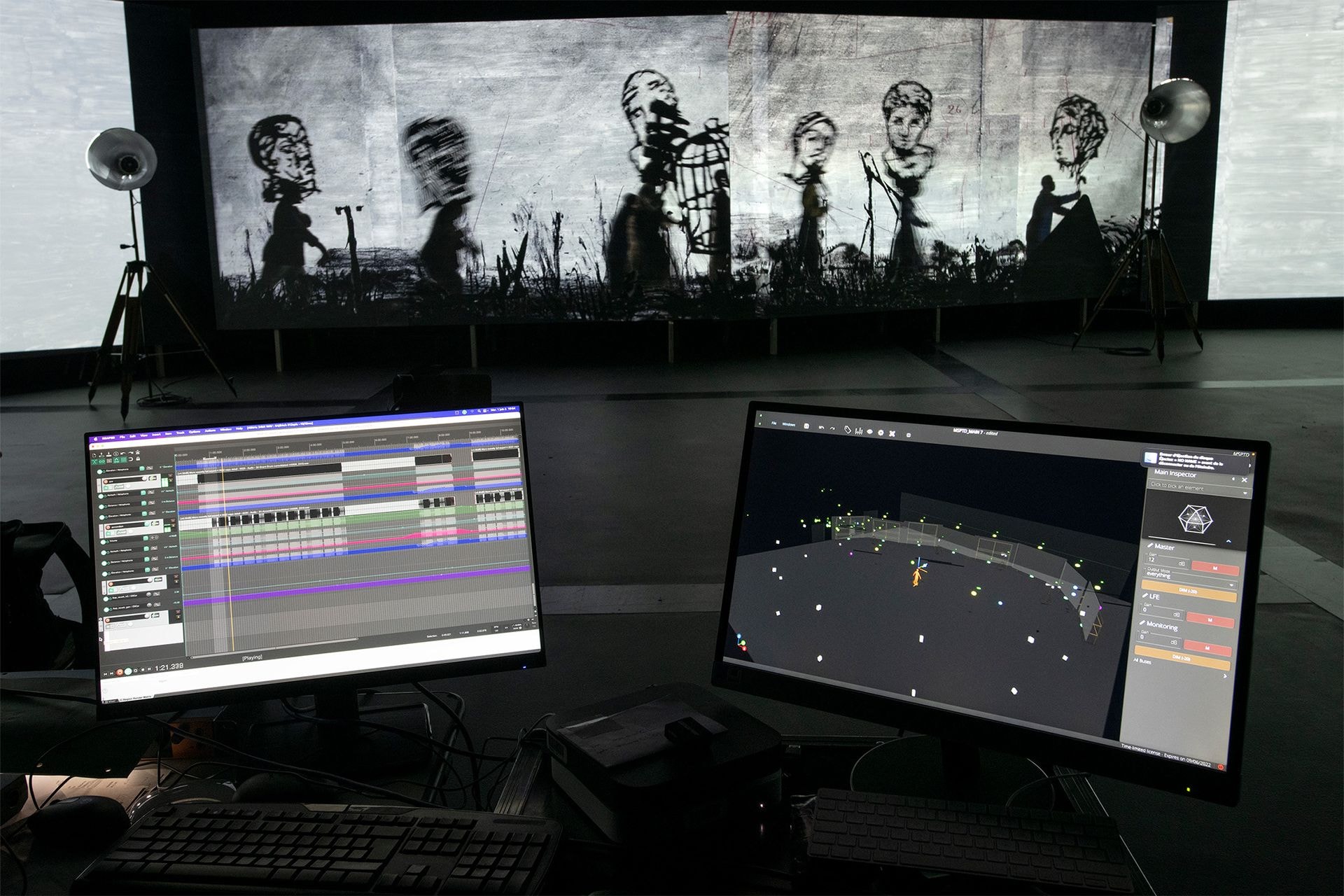
After evaluating the spatialisation algorithms available in HOLOPHONIX Native, Gavan Eckhart selected LBAP (Layer-Based Amplitude Panning) for the main loudspeaker system and a stereo panning algorithm for the four acoustic horns. Optimised for multi-layer loudspeaker configurations, LBAP provided the flexibility required to reproduce the movement of the procession naturally throughout the exhibition space.
The soundtrack was mixed in REAPER, while the movements and trajectories of the sound objects were programmed using the HOLOSCORE plugin. The final object-based mix was then rendered by HOLOPHONIX Native for playback throughout the exhibition.
This successful collaboration, subtly blending art, multiple techniques, and technology, creates a true 'augmented' version of William Kentridge's work.
We were so impressed with the results that we unanimously decided, together with video designer Rembrandt Boswijk, that future installations of this work will be spatialised with the HOLOPHONIX solution. The integration of this new technology into our production workflow was almost seamless and extremely pleasant to deal with. The result definitely takes this piece to another level of immersion and emotional realism,
concludes Gavan Eckhart.