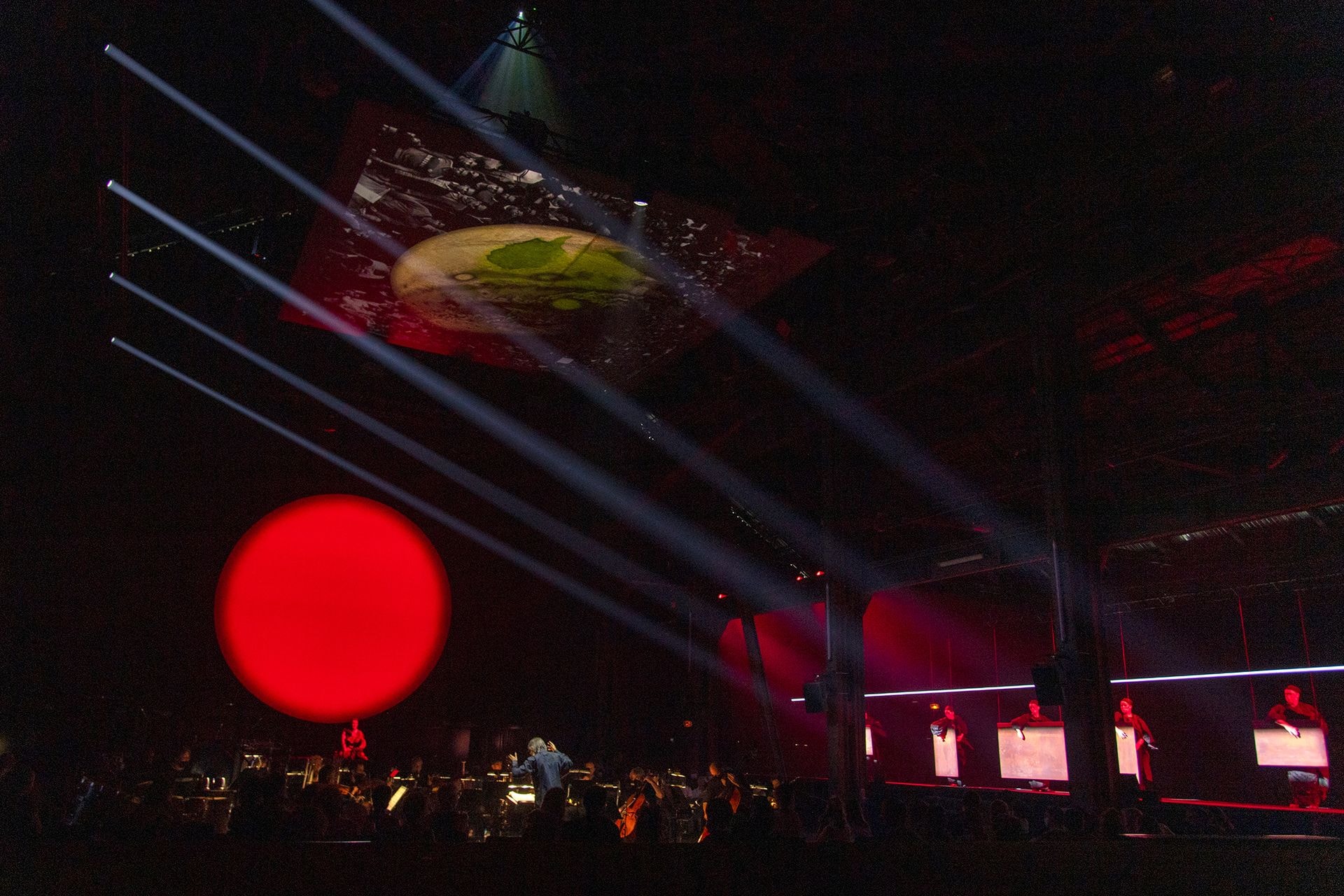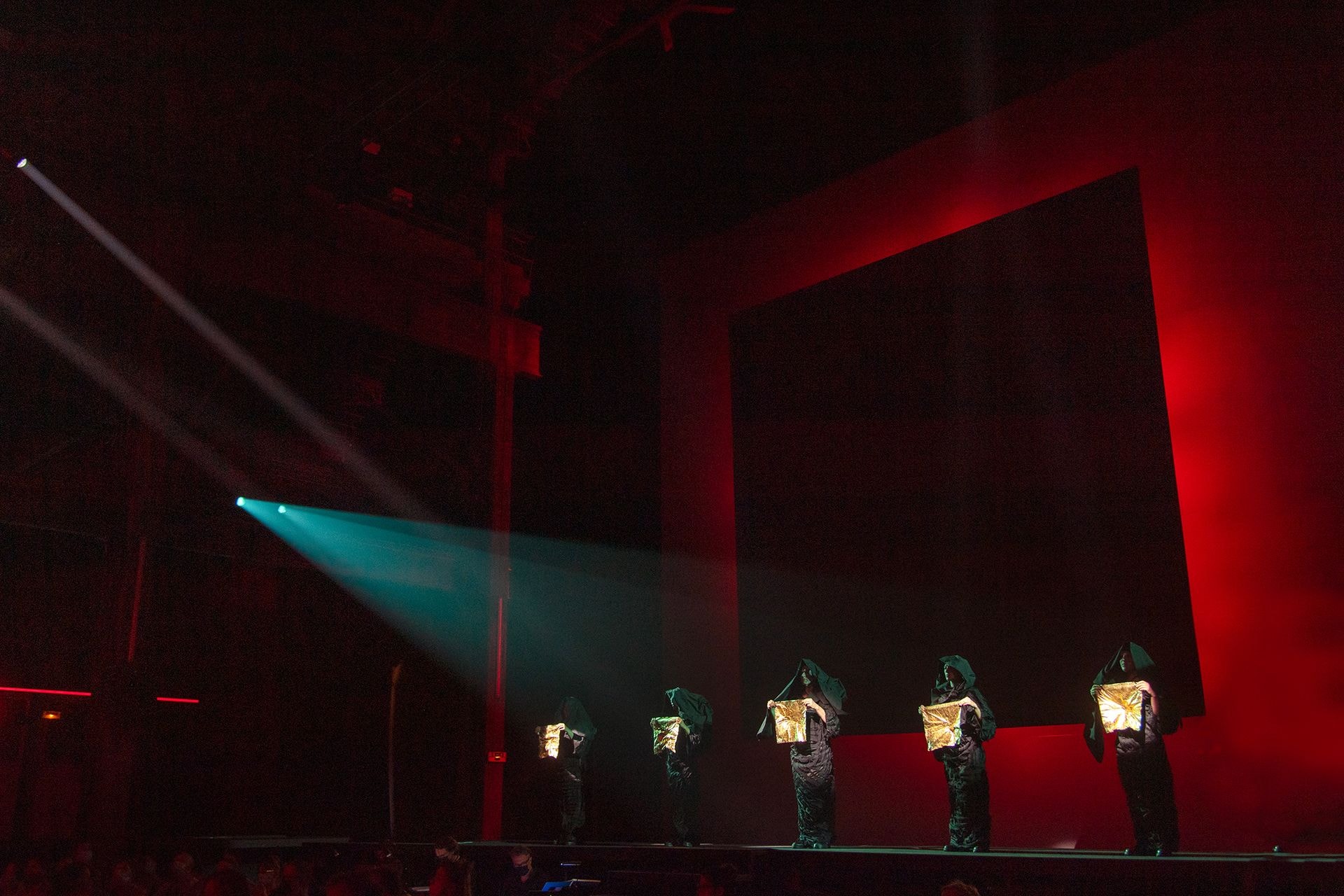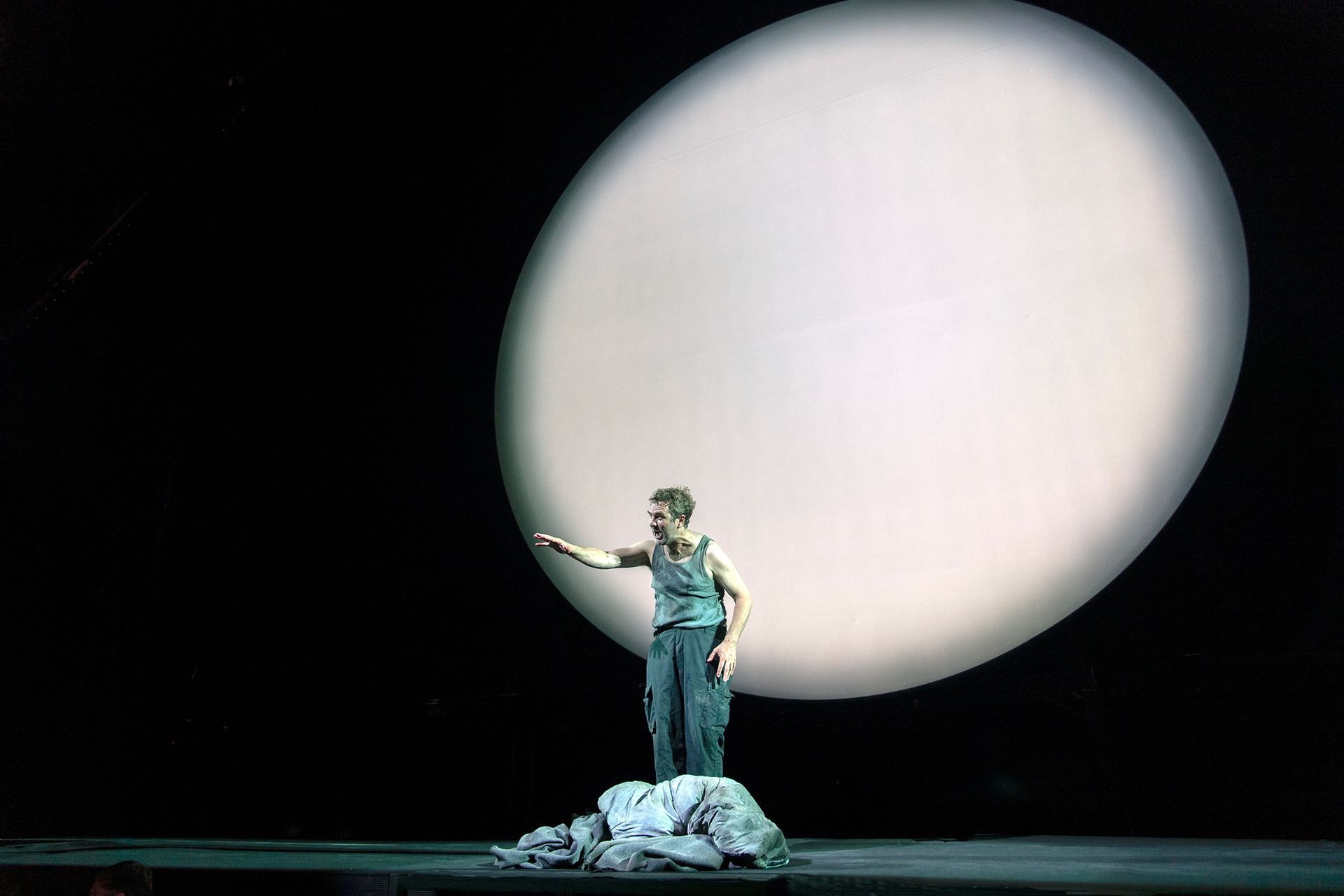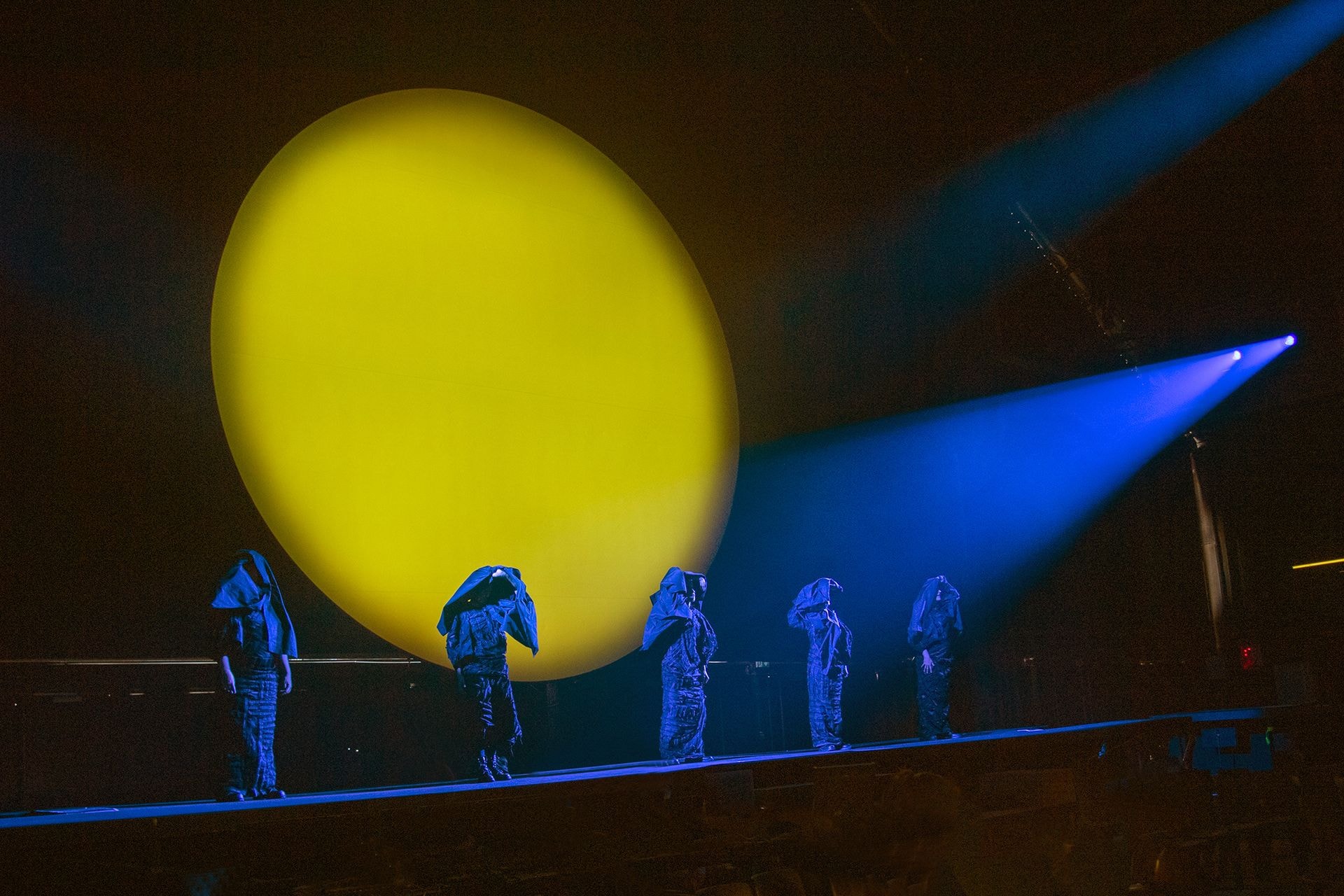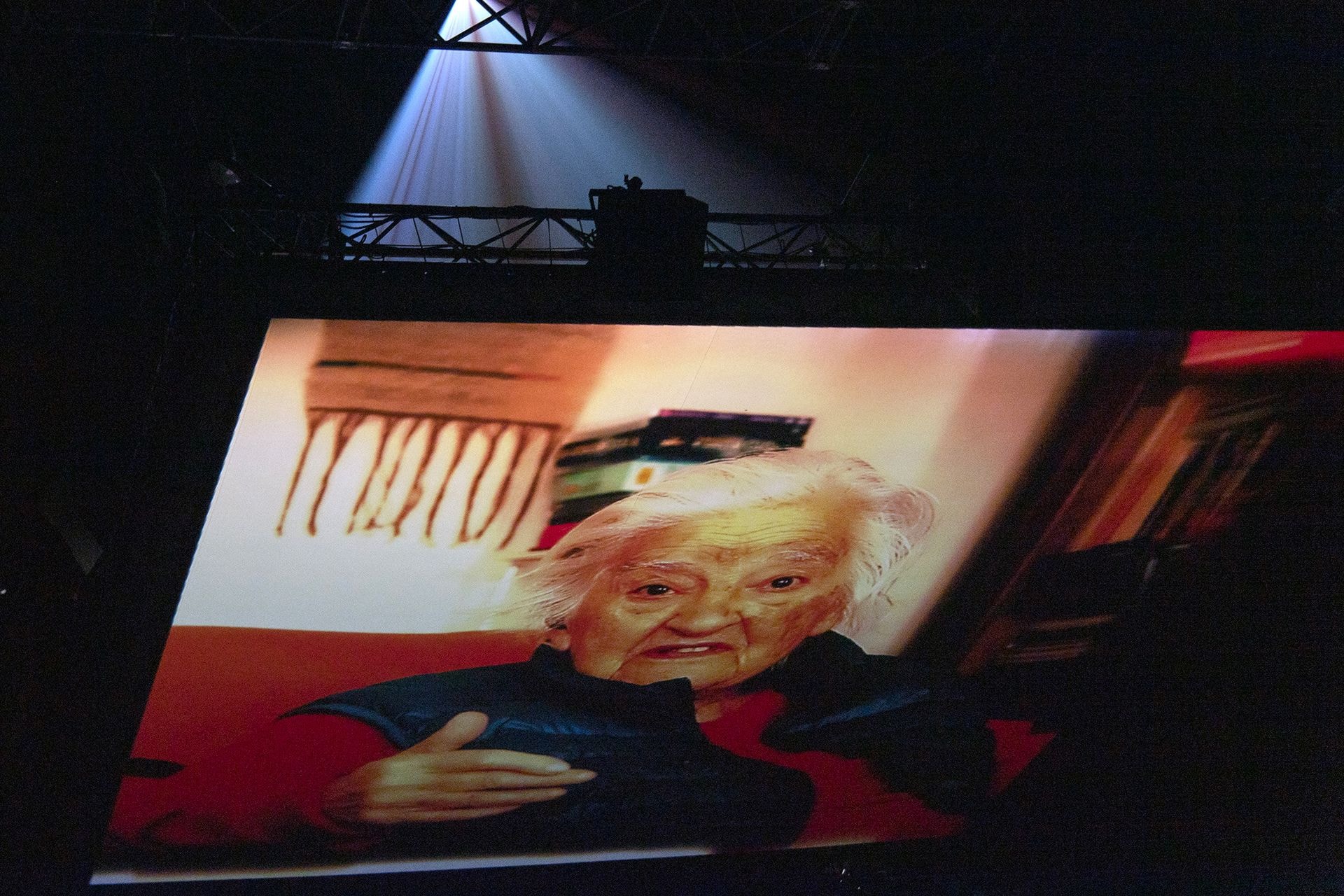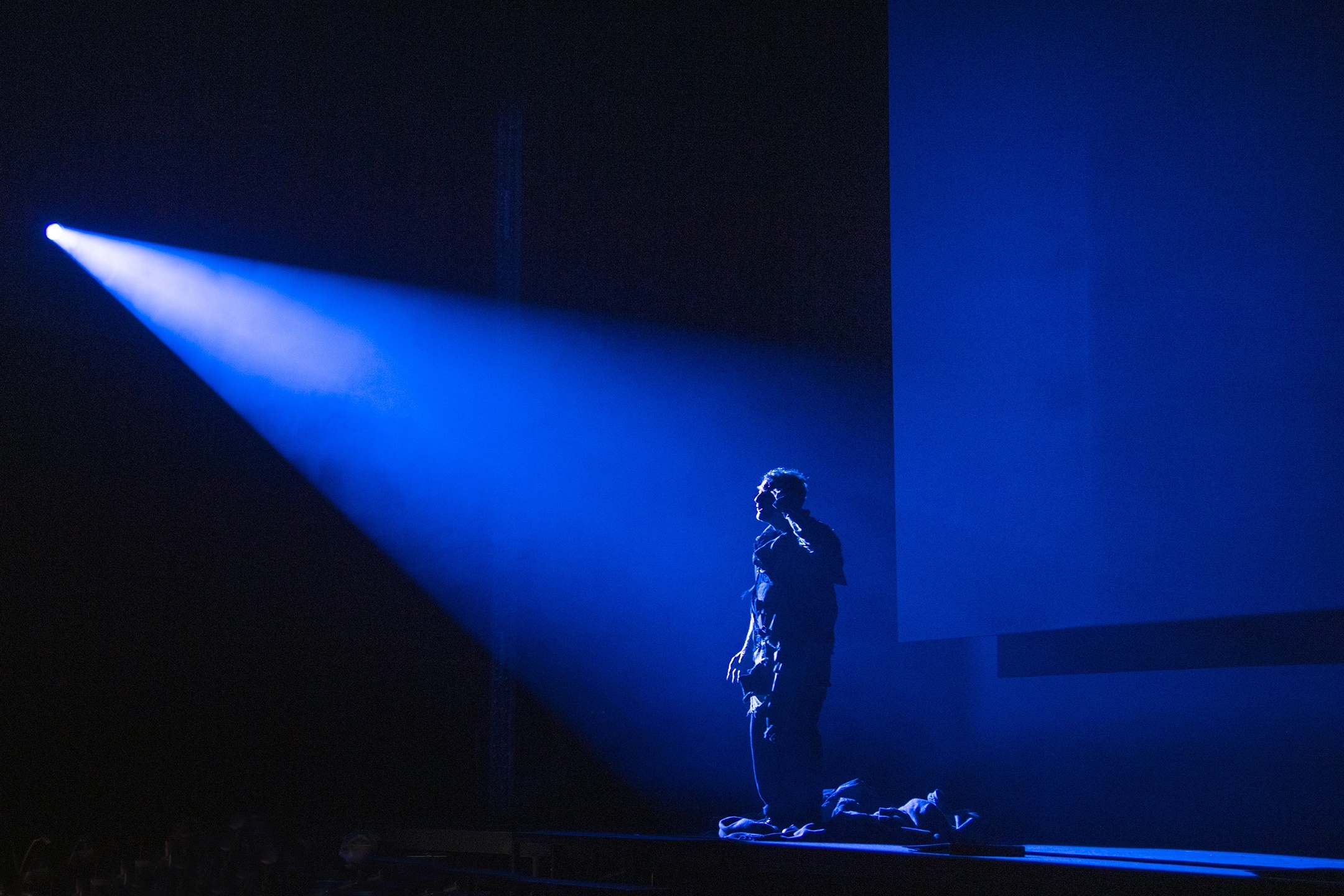
Premiered at the Festival d’Aix-en-Provence in the Grande Halle at LUMA Arles, L'Apocalypse Arabe by composer Samir Odeh-Tamimi is inspired by the eponymous poem by Etel Adnan, one of the most influential voices in contemporary literature and thought. Directed by Pierre Audi and performed by Ensemble Modern under musical director Ilan Volkov, the production transforms the performance space into an immersive environment where music, light, scenography, and spatial sound become integral elements of a unified dramaturgy.
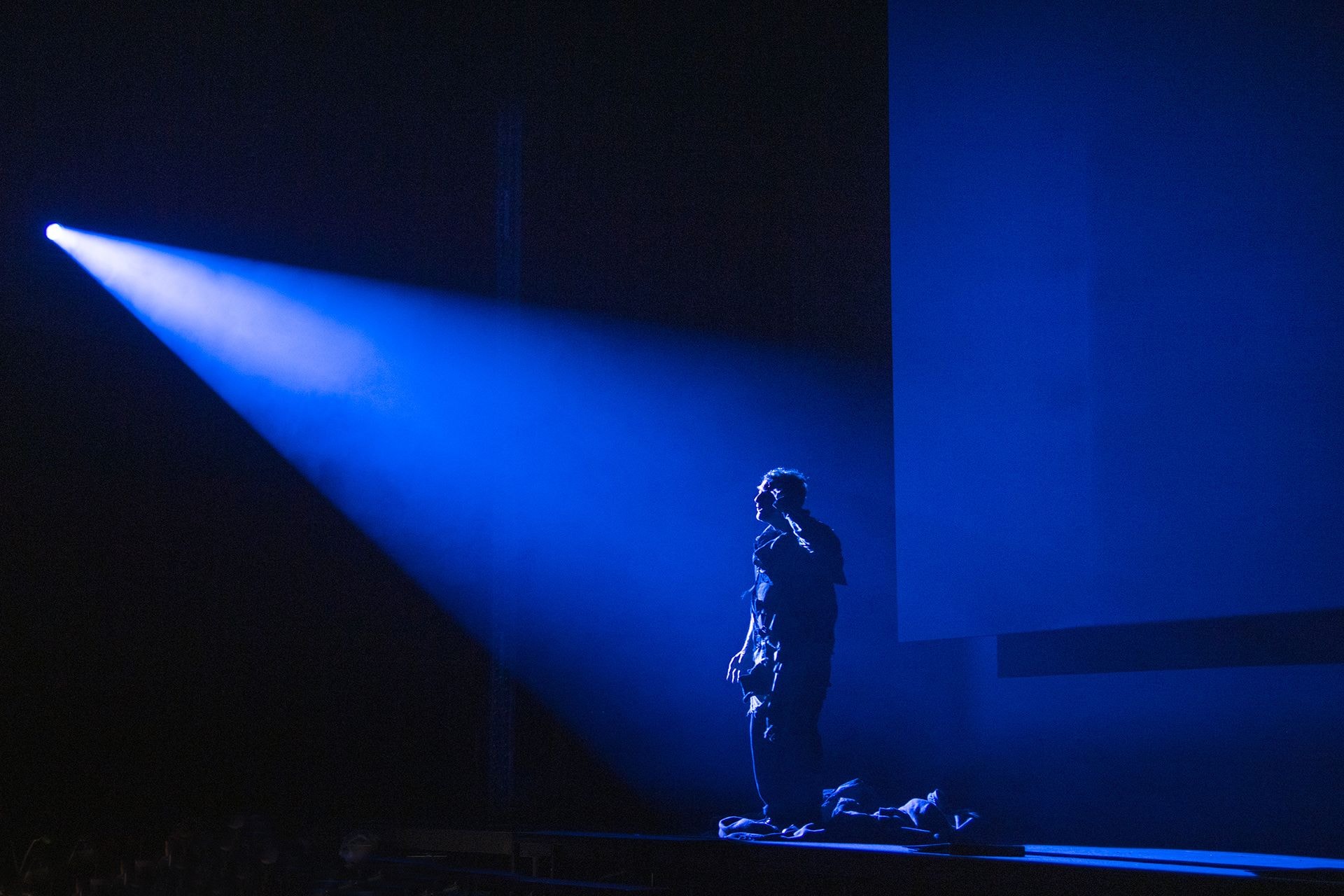
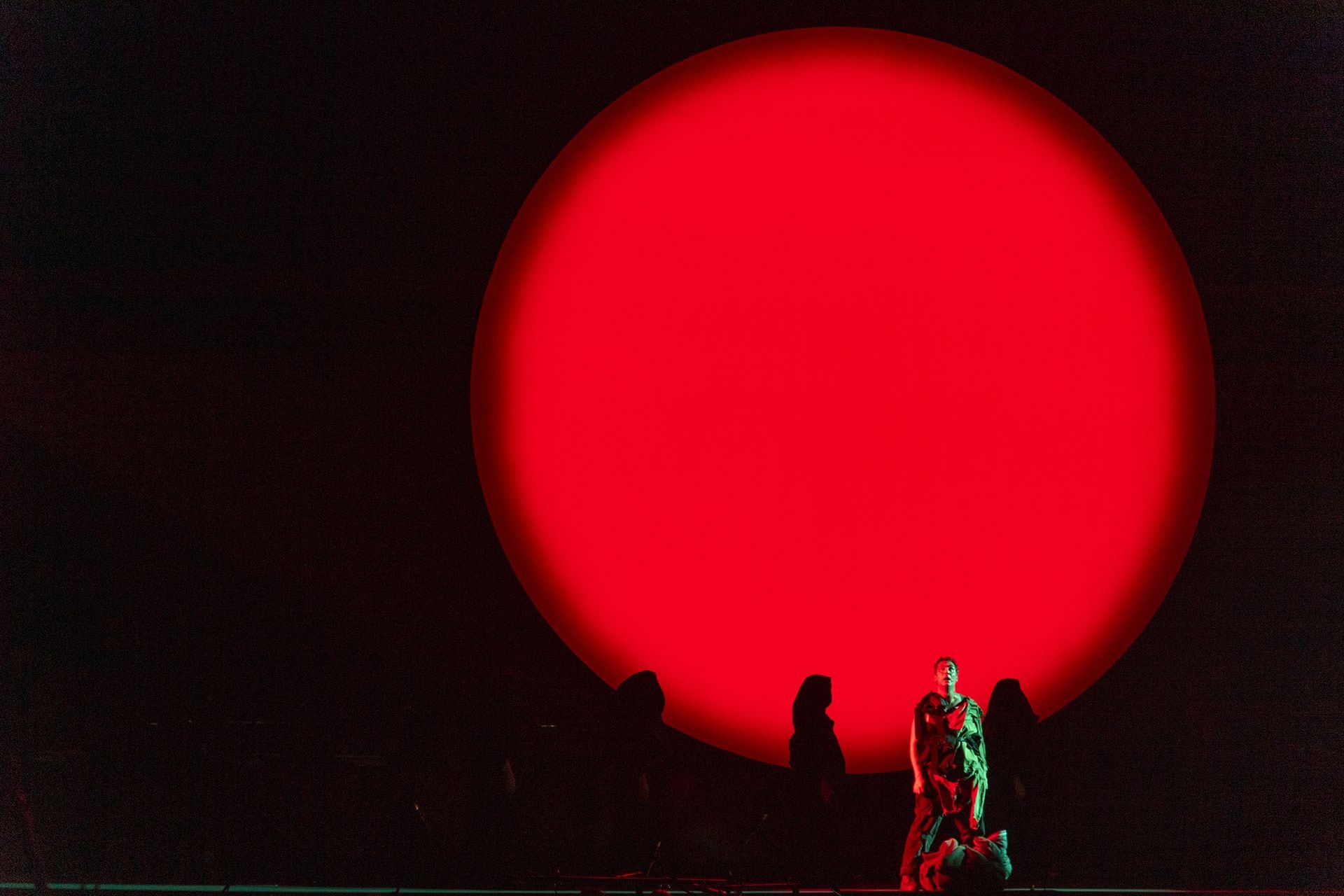
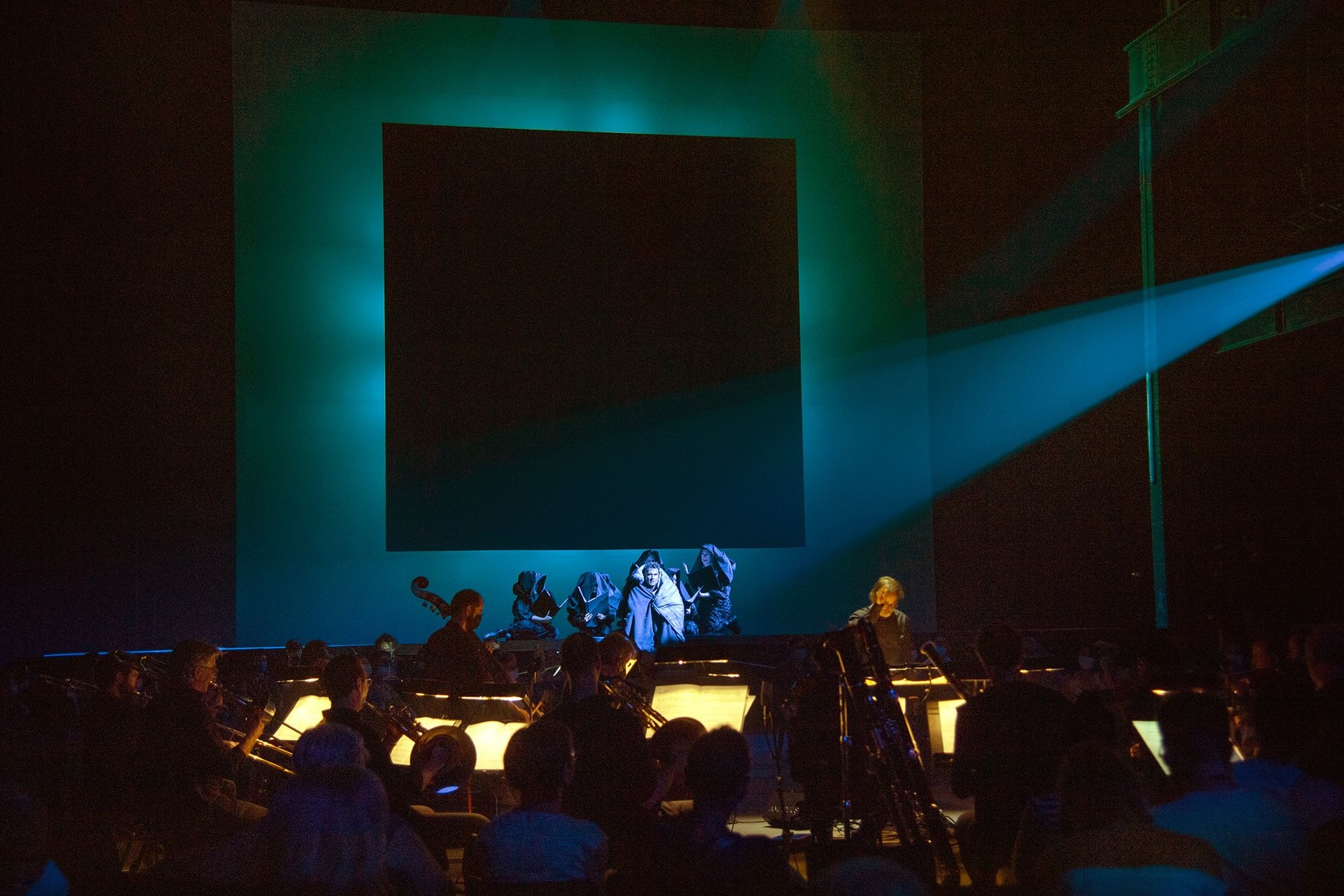
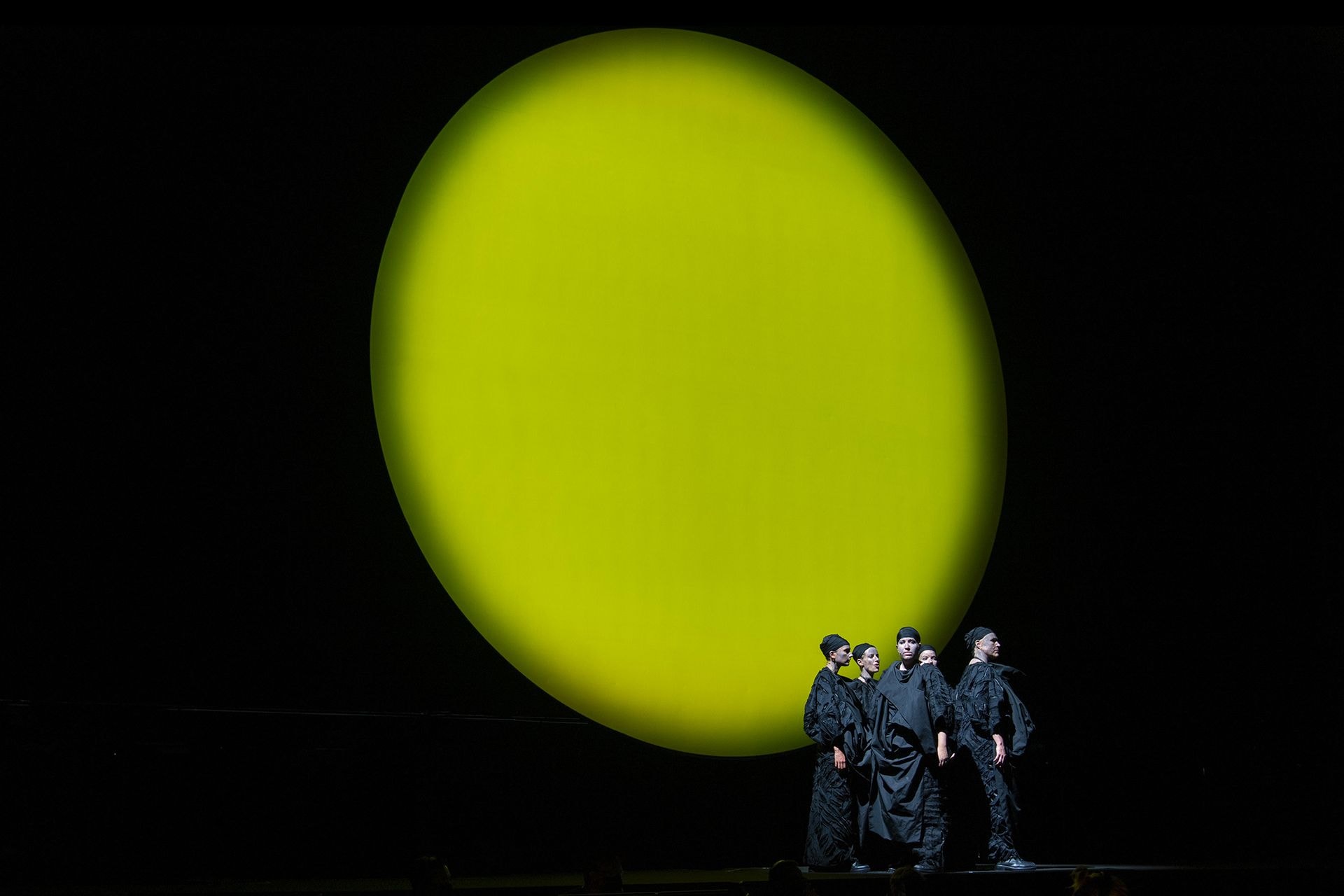
Urs Schönebaum's scenography places the audience at the heart of the performance. Four large platforms, on which the performers move, surround the audience, with the orchestra in the centre. Four scenographic elements inspired by Etel Adnan’s visual universe structure the stage environment. The Sun and the Eclipse face one another as two monumental illuminated structures, while the Star and the Horizon are represented respectively by a single spotlight and a long line of light.
Within this scenography, Pierre Audi's spatial staging encourages the audience to continually shift their gaze through a full 360 degrees. Amadeus designed a bespoke immersive sound system driven by the HOLOPHONIX spatial audio processor, allowing voices, instruments and electronic elements to be positioned and moved throughout the performance space.
Three layers of sound
The system was conceived around three complementary layers of Amadeus loudspeakers, combining elevation, envelopment and precise source localisation around an audience seated at the centre of the performance.
Four Amadeus C 15 loudspeakers were flown from the central truss at a height of nine metres, forming the upper layer of the system and providing the vertical dimension required for the spatialisation of electronic material.
A second ring of twelve Amadeus C 12 R point-source loudspeakers surrounded the audience at a height of 3.4 metres. Installed around the perimeter of the space using a bespoke rigging system developed by the Festival d’Aix-en-Provence, this layer created an enveloping sound field for electronic elements while also reinforcing the singers.
Closer to the performers, sixteen Amadeus PMX 5 point-source loudspeakers formed the localisation layer: eight positioned around the central orchestra and eight across the surrounding platforms. Their proximity to the performers helped anchor the perceived sound to its physical source, maintaining a natural connection between what the audience heard and what they saw.
Eight Amadeus ML 18 subwoofers installed beneath the platforms extended the system into the low frequencies, while PMX 8 coaxial monitors provided stage monitoring for the conductor and musicians.
Each loudspeaker was driven independently, enabling HOLOPHONIX to control the different horizontal and vertical layers as a unified three-dimensional sound field.
The variety of algorithms offered by HOLOPHONIX allowed us, together with Norbert Ommer, to fine-tune the sonic challenges posed by the scenography, the spatial arrangement and the vocal complexity of the score. We chose two algorithms for this production: WFS, which allows precise and natural source localisation, and KNN, an intensity-based panning algorithm that offers great flexibility,
explains Clément Vallon, who worked alongside Ensemble Modern sound director Norbert Ommer on the spatial audio design and HOLOPHONIX operation.
From individual voices to a collective presence
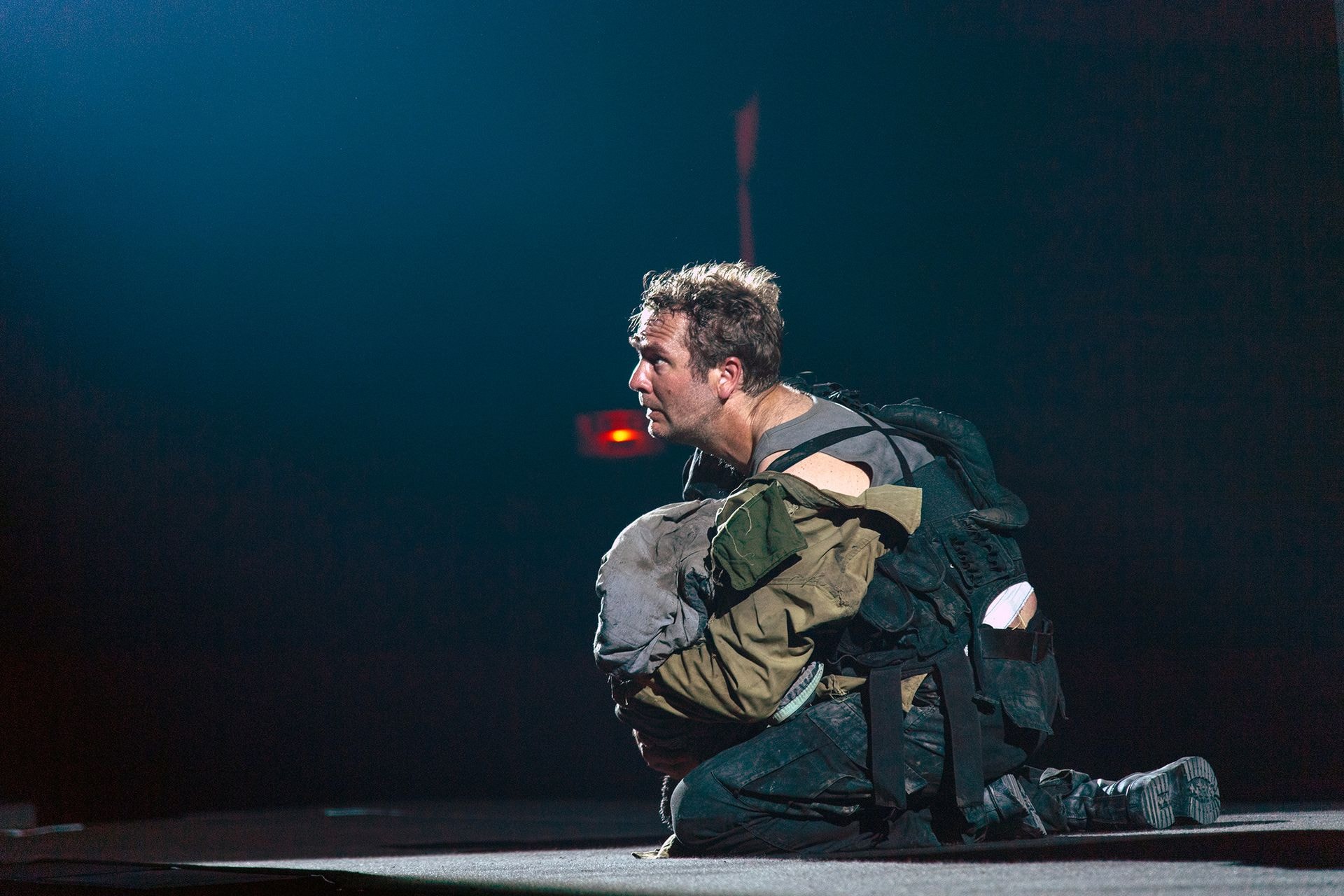
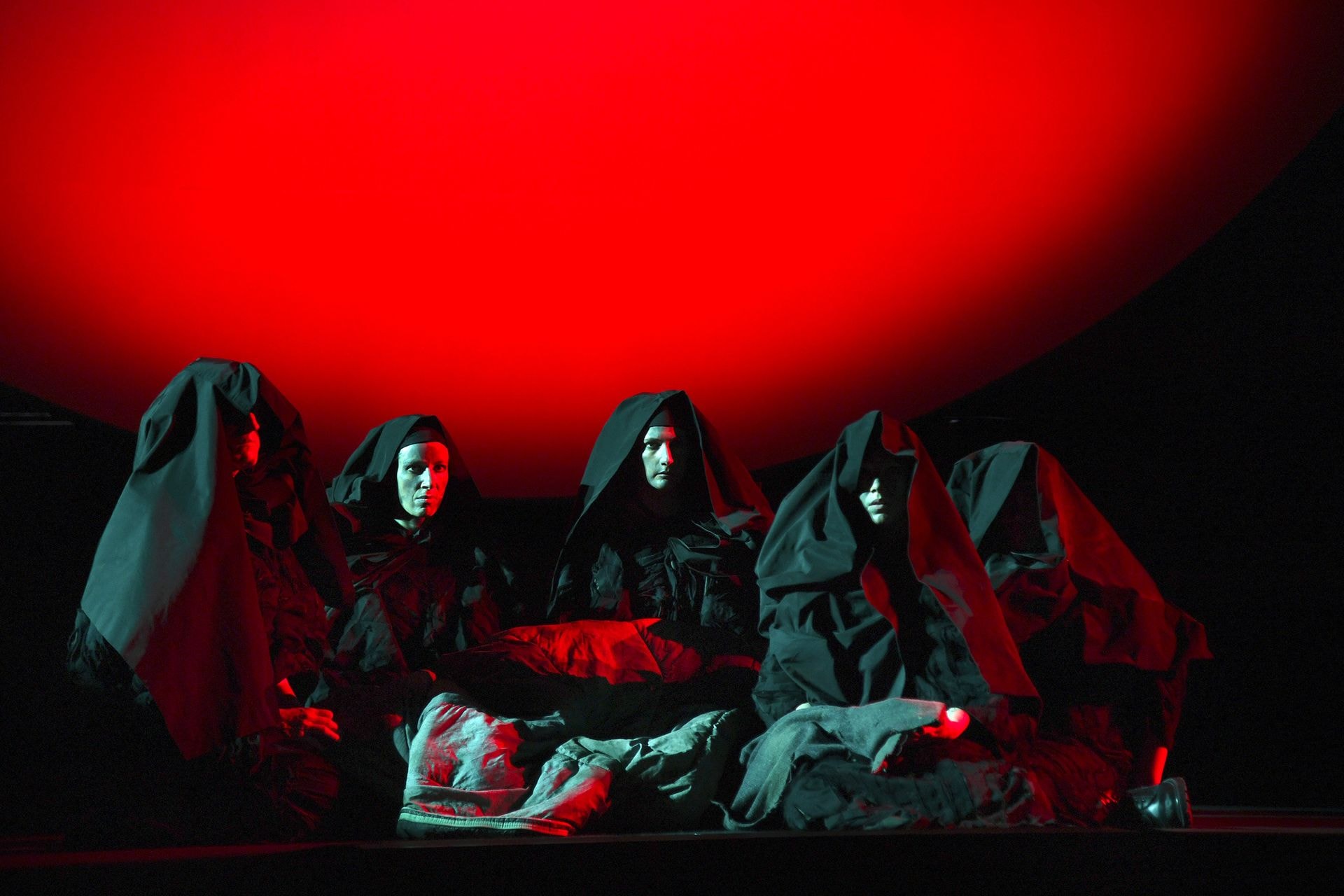
This adaptation of the poet Etel Adnan's work features seven performers: 'The Witness' (the only solo role sung by Thomas Oliemans) and the female choir ( Camille Allérat, Pauline Sikirdji, Fiona McGown, Camille Merckx, Helena Rasker), as well as 'The Outsider'.
In her libretto, Claudia Pérez Iñesta describes the composition of this choir as
a single neutral body with five multidirectional heads [...], permanent metamorphosis, the palette of colours and voices is dizzying for the spectator, like a "spin-dry effect".
Working with Norbert Ommer, musical director Ilan Volkov and composer Samir Odeh-Tamimi, the sound team used the WFS algorithm to shape the choir's spatialisation in accordance with the score. During more narrative passages, each voice could be precisely localised within the space, while at other moments WFS enabled the individual voices to merge into a single choral entity, reinforcing the composer's vision of the choir as one collective presence.
The voice of the outsider also received different treatment. The pre-recorded Arabic voice, performed by Samir Odeh-Tamimi himself, was reproduced exclusively through the elevated Amadeus C 15 loudspeakers, creating the impression of a disembodied voice suspended above the audience.
To reinforce its ethereal character, the team applied KNN spatialisation combined with a subtle rocking motion. HOLOPHONIX provided precise control over how the voice was distributed across the loudspeaker system, preserving intelligibility while refining the movement effect.
KNN proved particularly well suited to the production's loudspeaker layout, as it distributes sound according to the distance between the virtual source and the loudspeakers rather than their angular position. This approach allowed sound to be distributed consistently across an audience seated within the array, without favouring a particular listening area.
Through the combination of Amadeus loudspeakers and HOLOPHONIX spatial processing, sound became an integral part of the production’s 360-degree dramaturgy. Localisation, movement and elevation extended the scenography beyond the visual field, guiding the audience’s attention through a performance conceived to be experienced from within.
System
Amadeus: 4 × C 15 · 12 × C 12 R · 16 × PMX 5 · 8 × ML 18 · PMX 8 stage monitors
Processing: HOLOPHONIX spatial audio processor
Amplification: 72 Powersoft amplifier channels
Audio network: Redundant Dante, 24-bit / 96 kHz